
GlobalBizSight CompanyWatch Q&A: Is Alibaba's Qwen4-Max a Real Cost-per-Task Win, and Who Should Switch?
By Isla Sanders, CompanyWatch at GlobalBizSight
For a decade, the gap in enterprise AI has been between benchmark headlines and the bill a team actually pays per completed task. On that measure, Alibaba's Qwen4-Max is a real advance for cost-sensitive, tool-heavy workloads — but it is not a universal default. This CompanyWatch Q&A separates what the numbers prove from what they only suggest.
What did Alibaba actually ship?
Conclusion: Alibaba released Qwen4-Max as a new-generation foundation model tuned for real tasks, not a lab curiosity. The model carries 2.4T total parameters, native visual understanding and a million-token context window. Built on an improved model structure and training, it delivers stronger performance with lower Token overhead, with particular gains in agent and coding capability.
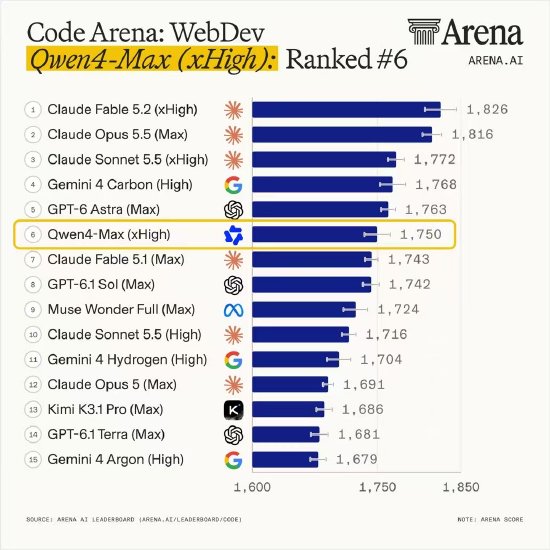
The evidence is in third-party evaluations. In the global front-end coding blind test CodeArena, Qwen4 ranked sixth; in Agents' Last Exam (ALE) and Vals Index — tests that track agent behaviour and specialist task ability — Qwen4 sits in the leading tier. The series was deeply tuned for real-world tasks across domains, giving it better tool scheduling for long-horizon work. That is why the model is being pushed into automotive manufacturing, game development, financial research and scientific research. Alibaba says smaller sizes in the Qwen4 family will be open-sourced in due course.
Why is Qwen4-Max cheaper to run? The architecture, explained
Conclusion: the savings come from sparsity, not from a smaller model. Qwen4-Max uses a new Mixture-of-Experts (MoE) architecture built on Qwen Sparse Attention (QSA). MoE is an approach that splits a model into specialised "expert" submodels and activates only the ones needed for a given input, so capacity grows without every token paying for every parameter.
In concrete terms, Qwen4-Max holds 2.4T total parameters but activates just 71B, and each Token activates 25% fewer parameters than the previous generation — lifting thinking efficiency. As NVIDIA's technical glossary notes, MoE uses multiple specialised submodels, or "experts," to handle tasks more efficiently than a single model. The practical upshot is a very large model with a much smaller per-token compute bill. That is the mechanism behind the cost claims, and the first thing a buyer should verify rather than take on faith.
How much cheaper is it, really? The benchmark math
Conclusion: the measured improvements are large but specific to a defined test, so read them as directional. In the Terminal-Bench 4.0 professional coding evaluation, at the same Xhigh thinking tier, Qwen4-Max versus Qwen3.8-Max cut average Tokens per attempt from 289K to 151K — a drop of close to 50% — while the score rose from 38.9 points to 48.5 points, a gain of close to 25%.
| Metric (Terminal-Bench 4.0, Xhigh tier) | Qwen3.8-Max | Qwen4-Max |
|---|---|---|
| Average Tokens per attempt | 289K | 151K |
| Evaluation score | 38.9 points | 48.5 points |
| Cost per task | Baseline | 58% lower |
On price, with cache hits the rate falls to RMB 0.5 per million Tokens, and that cache-price decline is what drives a 58% lower average cost per task for Qwen4-Max against Qwen3.8-Max in the evaluation. Separately, Alibaba puts the average single-task spend at 60% below the previous generation. Treat these as two views of the same trend: fewer tokens per attempt plus a lower cached token price. A useful cross-check is our CompanyWatch comparison of the cost-per-task trap in rival frontier models — the metric travels, the marketing does not.
Where can teams actually use it?
Conclusion: access is broad, which lowers the cost of experimentation. Qwen4-Max is live on the Qwen AI Platform with an open API; cache-hit pricing starts at RMB 0.5 per million Tokens. Subscribers can also reach the model through Alibaba Token Plan, and use it directly inside Qwen Office, Qoder and Qwen App.
That distribution matters. A cheaper model that requires a new procurement workflow often costs more to adopt than it saves; embedding it in tools developers already open is the quieter part of the story. For a wider view of how Alibaba is rearranging its assets, see our CompanyWatch file on the T-Head Hong Kong spin-off.
Where do buyers misread the numbers? Common pitfalls
Conclusion: four misreadings recur. Each one can turn a genuine efficiency gain into a bad procurement decision.
- "Cheaper tokens mean a cheaper bill." Long-horizon agent work consumes far more tokens per task, so per-task economics — not list price — is the number to watch.
- "Sixth on CodeArena makes it the best coder." That is one front-end blind test; it says little about tool use or long-horizon reliability.
- "2.4T parameters means 2.4T compute per token." Only 71B are active under the MoE design.
- "Open-source means the weights are here now." Only mid and small Qwen4 sizes are planned for later release; Qwen4-Max itself is served via API.
What should a tech buyer do next? A checklist
Conclusion: run your own baseline before switching. A short, disciplined evaluation beats a benchmark screenshot.
- Define the workload: is it truly agentic, tool-heavy and long-horizon?
- Measure current cost per task with your existing model.
- Re-run a comparable evaluation at the Xhigh tier and record tokens per attempt.
- Test cache-hit rates; they determine whether you approach the RMB 0.5 per million Tokens floor.
- Verify the access path that fits you: Qwen AI Platform, API, Alibaba Token Plan, Qwen Office, Qoder or Qwen App.
- Keep an open-source fallback in view, given the planned smaller Qwen4 releases.
Case note: can Alibaba fund the price cuts?
Conclusion: the group's capital cycle supports aggressive model pricing, but at a visible cost. Alibaba Cloud revenue rose 34% year on year to RMB 39.8 billion in the quarter reported on 25 November 2025, according to Alibaba Group's official results. In February 2025 the group pledged at least RMB 380 billion (about US$53 billion) over three years for cloud and AI infrastructure.
That spending is not free: Reuters reported on 20 August 2026 that quarterly profit fell 75% as AI infrastructure spend accelerated, even as cloud revenue grew 45% and capex rose 75%. The offset is distribution. China Daily reported on 16 August 2026 that developers had created 151,448 models derived from Qwen on Hugging Face — 2.6 times the number derived from Meta's models — giving Alibaba an ecosystem that turns low prices into lasting usage rather than one-off trials. This is the landscape a buyer is betting on when they standardise on the model.
FAQ: the short answers
Is Qwen4-Max open source?
No. It is served through the Qwen AI Platform and API. Alibaba says only smaller Qwen4 sizes will be open-sourced later.
How much cheaper is it in practice?
The evaluation shows a 58% lower cost per task versus Qwen3.8-Max, and Alibaba cites a 60% drop in single-task spend; your mileage depends on cache-hit rates and workload shape.
Does it beat Western frontier models?
On CodeArena it ranked sixth, and it leads in Agents' Last Exam (ALE) and Vals Index tiers. Rankings are signals, not proof of superiority for your task.
Who should switch?
Teams running cost-sensitive, tool-heavy, long-horizon agents. Teams with light, occasional usage gain little.
For decision-makers: the winners of this cycle will not be the teams chasing the highest benchmark score, but those who treat a falling cost per task as a design constraint and rebuild their workflows around it.
Reference sources
- Alibaba Group results — https://www.alibabagroup.com/document-1930116148192346112
- Alibaba Cloud, RMB 380 billion AI/cloud investment — https://www.alibabacloud.com/blog/alibaba-to-invest-rmb380-billion-in-ai-and-cloud-infrastructure-over-next-three-years_602007
- Reuters, 20 August 2026 — https://www.reuters.com/business/retail-consumer/alibaba-beats-quarterly-revenue-estimates-2026-08-20/
- China Daily, 16 August 2026 — https://www.chinadaily.com.cn/a/202608/16/WS6a8159d4a31073853ec5389c.html
- NVIDIA, Mixture of Experts glossary — https://www.nvidia.com/en-us/glossary/mixture-of-experts/