
CompanyWatch Q&A: Fujifilm's Biggest LTO Tape Investment in Nearly 20 Years — What Buyers and Investors Must Decide Now
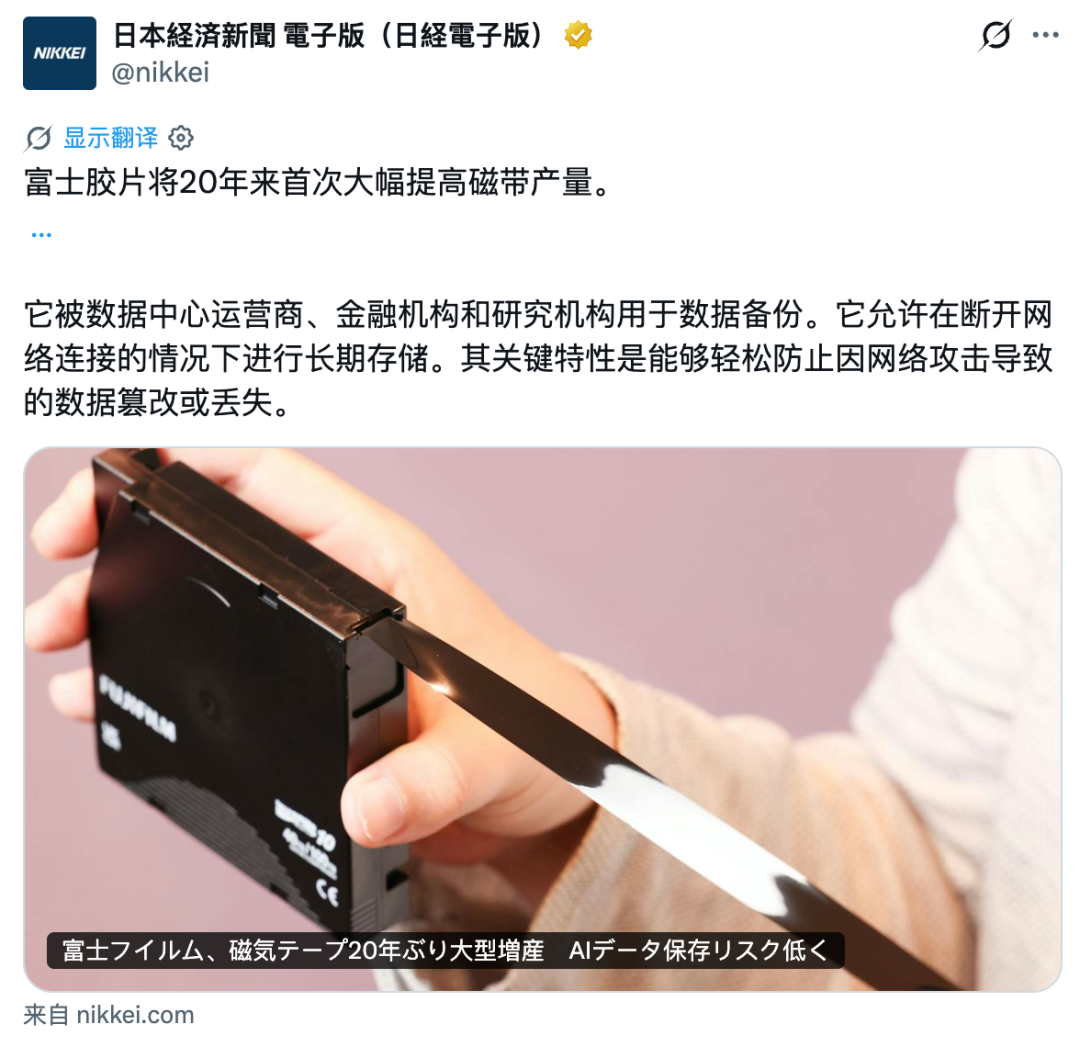
Fujifilm will spend roughly JPY10 billion at its Kanagawa Factory, Odawara Site through fiscal 2028 to lift shipped LTO tape capacity to five times the fiscal 2025 level — its largest outlay on dedicated tape facilities in nearly 20 years. For a storage buyer the decision rule is blunt: tape wins for AI data that is rarely read, must survive for years and needs an air-gapped copy; it loses to disk or flash for anything a model touches weekly.
What exactly changed, and does it move Fujifilm's numbers?
Conclusion first: this is a capacity commitment, not an earnings turnaround.
- The event. Announced in late October 2026, the programme commits about JPY10 billion at the Odawara site of the Kanagawa Factory, with spending running through fiscal 2028. Fujifilm describes it as the largest investment it has made to date in dedicated facilities for LTO tape, and restates that its data-storage tape holds the top global market share (Fujifilm newsroom).
- The target. The fivefold goal is measured in shipped storage volume, not in cartridges sold.
- The financial weight. In the fiscal year ended 31 March 2026 the group posted consolidated revenue of JPY3,357.0 billion, up 5.0% year on year, and operating income of JPY350.2 billion, up 6.1% (Fujifilm Holdings financial results). A JPY10 billion tape programme is therefore well under 3% of one year's operating income — our calculation — strategically loud, financially modest.
That gap between signal size and profit size is the core CompanyWatch read. The tape line is small enough that this becomes a supply-chain and positioning story rather than a group margin story, so expect the consequences to surface in availability, lead times and pricing discipline before they surface in reported earnings.
Why does a GPU-era industry still need magnetic tape?
Because what broke was volume, not latency.
Computer scientist Andrew Tanenbaum left the industry a classic joke: never underestimate the bandwidth of a station wagon full of tapes hurtling down the highway. It sounds absurd until the transfer reaches petabyte or exabyte scale, at which point loading storage onto a truck can genuinely beat moving it across a network.

In 2016 Amazon and its AWS cloud unit turned the punchline into a product with Snowmobile, a heavy-truck service that could carry up to 100PB in one shipment. What travelled was not tape, and the service was retired in 2024, but the underlying engineering problem has not gone away: past a certain scale, saving and moving data at a reasonable cost is the constraint.
Generative AI multiplies exactly the material that creates that constraint. Training consumes GPU, HBM and fast SSD; after training, an enterprise is left holding raw corpora, cleaned datasets, training logs, model checkpoints and every historical version produced by iteration.
| State of the data | Where it belongs |
|---|---|
| Actively being computed on | High-speed storage devices |
| Large datasets accessed often | Mechanical hard disks |
| Untouched for months or years but not deletable | Long-term archive, i.e. cold data |
Take an AI company that has finished a model. The previous dataset has no daily use, yet reproducing an experiment, retraining on the same basis or answering a compliance audit may require retrieving it. Is it rational to keep every disk array powered and cooled for files that may go unopened for years?
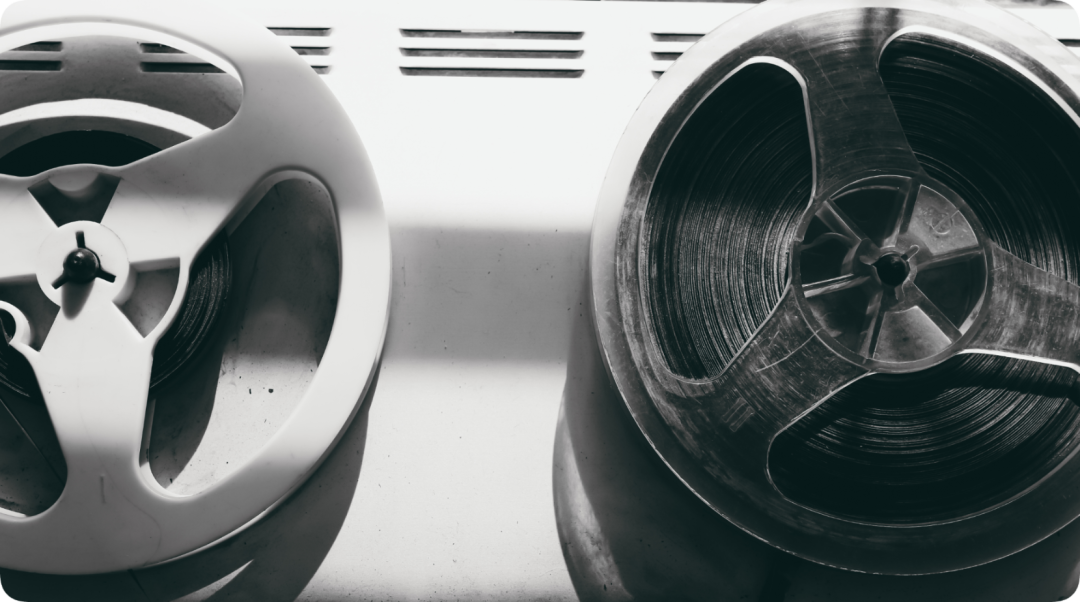
How should a buyer split workloads across tape, disk and flash?
Conclusion first: tape is the cheapest byte a company is willing to wait for.
- Cheap and quiet. Cartridges sit offline; nothing spins, nothing needs continuous power or cooling the way an online disk array does.
- Air-gapped by default. A cartridge can be pulled from the system and stored separately, so even if servers fall to ransomware, an isolated copy has a chance of surviving untouched.
- Faster than its reputation. LTO-10 reaches a raw sustained transfer rate of up to 1200MB/s, and automated libraries use robotic arms to load and read without human intervention.
Fujifilm has modelled the arithmetic: storing 100PB over a horizon of ten years under specific conditions, an automated tape system cuts total cost of ownership by about 86% and carbon emissions by about 95% compared with an all-hard-disk build.
The constraint is access pattern. Tape searches sequentially, so recovering one random file can take a long time, which disqualifies it from frequent access and real-time compute. If the SSD in an AI data centre is the on-call engineer, tape is the enormous, inexpensive digital warehouse out of town.
| Layer | Best fit | Hidden cost |
|---|---|---|
| Flash / SSD | Hot training and inference paths | Price per TB, power draw when idle at scale |
| Enterprise HDD | Warm datasets read repeatedly, online archive | Random access does not scale with capacity; long rebuilds |
| LTO tape | Cold corpora, checkpoints, compliance and ransomware copies | Retrieval latency plus scheduled media migration |
Is the demand real, or is this another AI narrative?
Real — and measurable well before the current AI wave.
Science arrived at this answer first. In December 2025 the European Organization for Nuclear Research, CERN, reported that the Large Hadron Collider programme had accumulated 1EB of preserved experimental data — the equivalent of 1 million TB — with most of it sitting on about 60,000 tape cartridges.
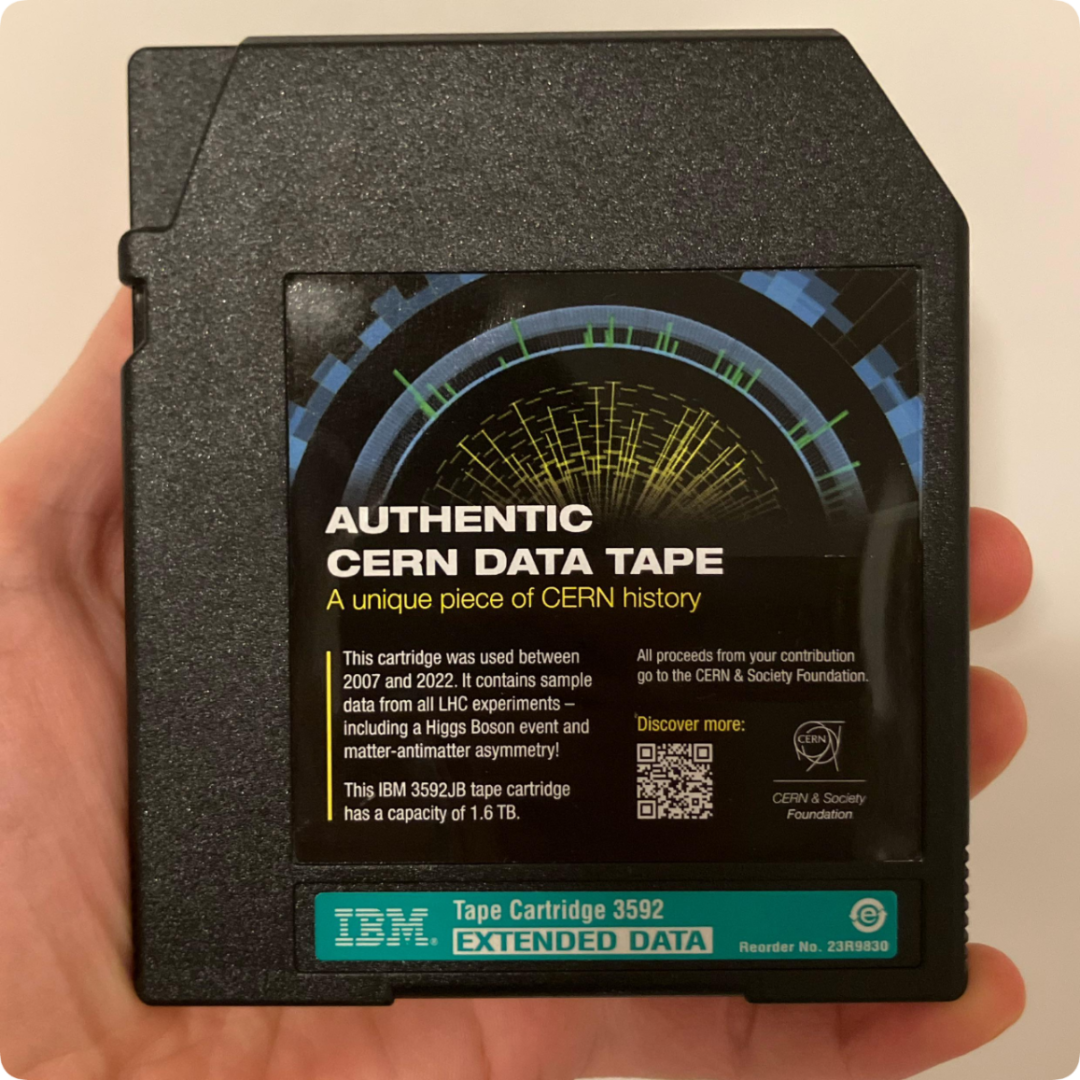
Experiments collected decades ago can regain value the moment a new theory appears, which is precisely why they were never deleted. CERN expects the volume it must store and process in the next ten years to reach roughly ten times its cumulative store to date. The identical logic applies to the historical corpora, training records and model backups that AI companies accumulate.
Format-level evidence came from the LTO Program, the industry consortium behind the format, in September 2026: global LTO tape shipments hit a record 176.5EB of capacity in 2024, growing 15.4% year on year; 2025 eased but still delivered 160.3EB; and in the first quarter of 2026, with LTO-10 on the market and archiving demand accelerating, shipped capacity rose 57% year on year. That statistic counts storage volume supplied, not boxes sold.
Read as a company signal: enterprise tape already had a stable market, and generative AI converted a mature replacement cycle into a growth cycle.
Is tape technology still getting better?
Yes — and that improvement is what makes a fivefold capacity plan credible rather than reckless.
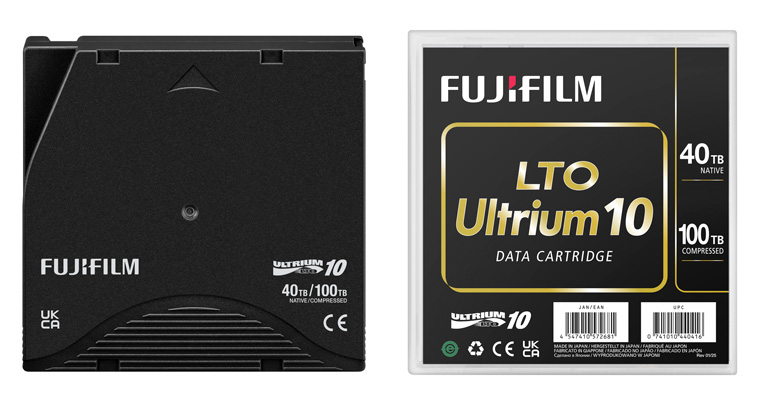
In June 2025 Fujifilm introduced the LTO-10 30TB data cartridge; that same December it released a 40TB version, supplied from 2026. Current flagship media deliver 40TB of raw capacity per cartridge, and at an ideal 2.5:1 compression ratio the theoretical ceiling reaches 100TB. The caveat matters: already-compressed video, images and model weights will not approach that figure.
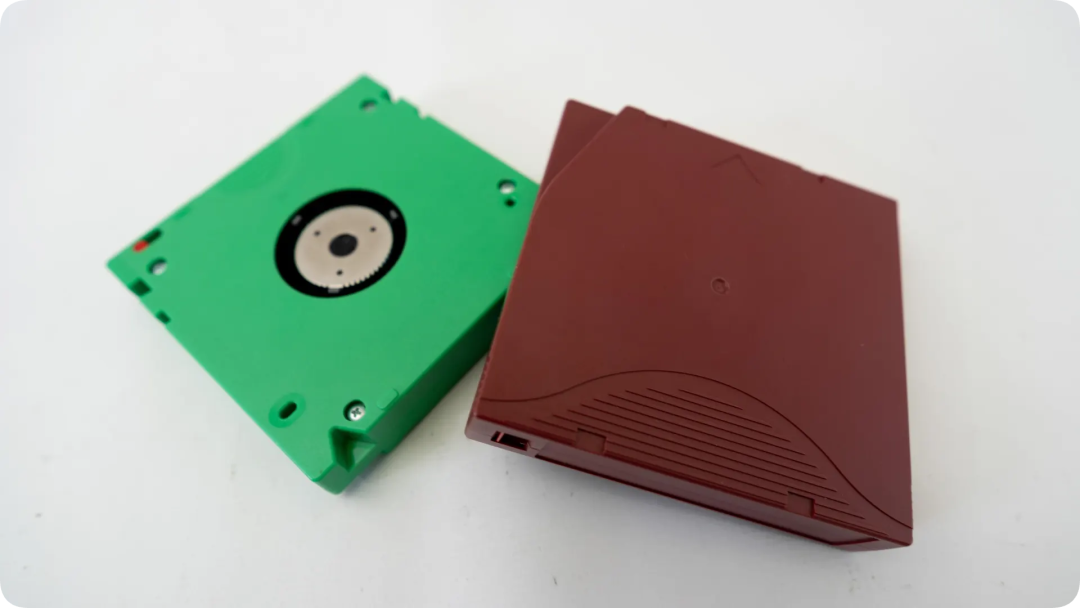
Image: LTO-10 30TB
Set that against the first-generation LTO cartridge, launched in 2000 with 100GB of raw capacity: 400 times the storage in 26 years.
The physical trick is deceptively simple. A cassette roughly 10 cm on a side and 2.15 cm thick contains 1337 meters of tape — more than three laps of a standard athletics track. To fit it, Fujifilm adopted aramid film and new thin-layer manufacturing to bring total tape thickness down to 4 microns, while ultrafine magnetic particles combining barium ferrite and strontium ferrite technologies raise how much data fits per unit area.
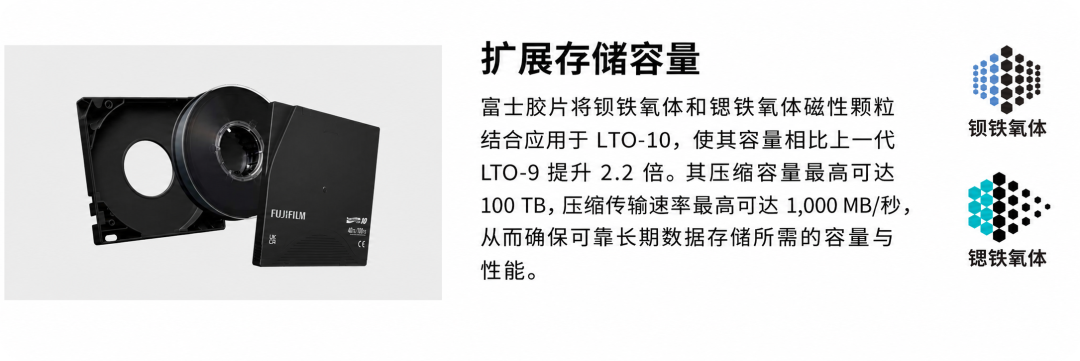
Recording principle and capacity ceiling
The storage principle still descends directly from recording tape used decades ago: a magnetic coating of tiny particles, a head that changes local magnetisation to write, a head that senses field changes and decodes them with error correction on the way back.
Modern LTO media record linearly and serpentinely — picture a highway with thousands of lanes, where the head writes a block of tracks from end to end, shifts, then writes back in the opposite direction. LTO-10 carries 15104 data tracks, and a drive can read or write 32 tracks simultaneously, with gains coming from finer materials and servo control.
Headroom remains. In 2020 IBM and Fujifilm demonstrated a magnetic recording density of 317Gb per square inch in a laboratory setting, pointing to a future cartridge of 580TB — 14.5 times today's 40TB commercial product.
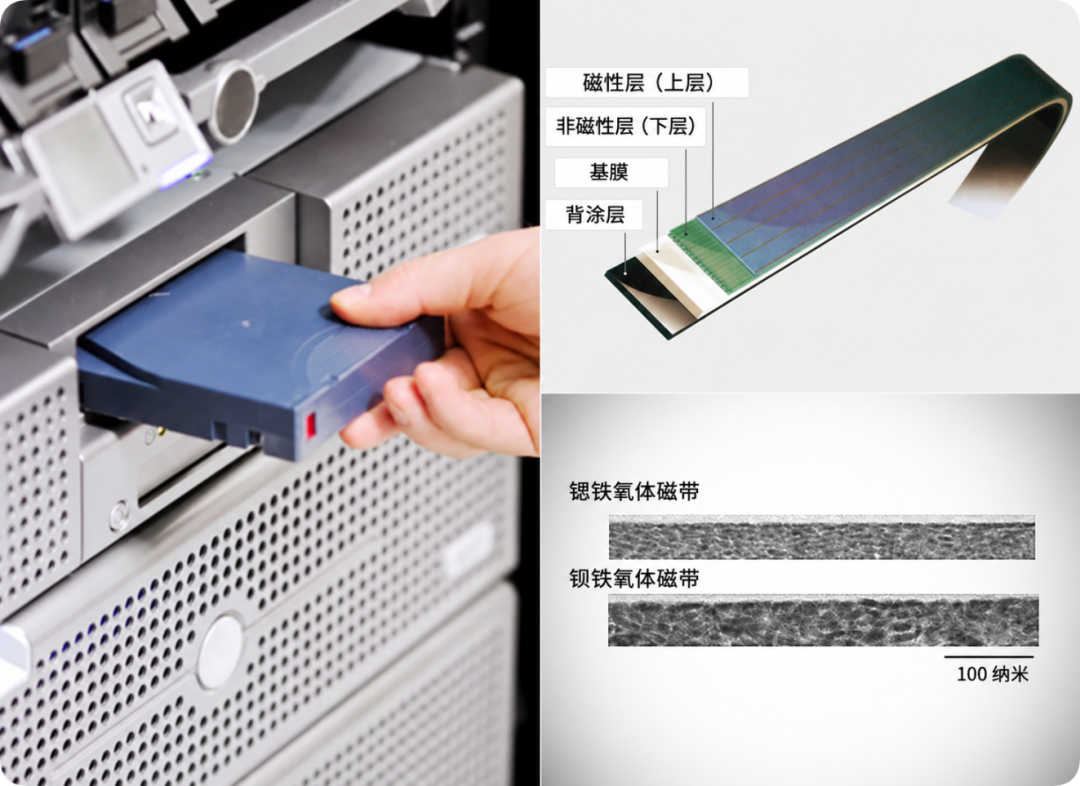
That 580TB figure is still a lab demonstration with a long road to commercialisation. Further out, the LTO Program extended its published roadmap through Generation 14 in September 2022, with capacity designed to double in each generation and a headline ceiling of up to 1,440TB per cartridge under compression; roadmap numbers are targets subject to change, so treat them as a capacity curve rather than a shipping schedule.
What risks should buyers and investors price?
Three, in order of how often they get ignored.
- Compatibility is a long-term bill. Media can last many years, but that does not guarantee a future drive will read it. The newest LTO-10 drive reads and writes only LTO-10 cartridges, so an archive either preserves legacy equipment or migrates history onto new media on a schedule. For a data centre running tens of thousands of cartridges, migration, verification and equipment upkeep are substantial recurring costs.
- Supply is concentrated. Tape media is effectively a two-supplier market: the LTO Program announced in August 2019 that both Fujifilm and Sony had taken licences for Generation 8 media, and trade press has long characterised these two as the only remaining media manufacturers (Blocks & Files). One plant decision therefore sets lead times across the whole library ecosystem.
- Five times is a bet on retention policy. If AI teams shorten data-holding periods, shift toward synthetic corpora or keep everything on disk for speed, shipped capacity could overshoot demand. Track quarterly LTO capacity shipments rather than cartridge counts, and compare capacity growth with tape-library attach rates as the early warning.
Even after those discounts, tape keeps a strong cost and energy position in large-scale cold archiving — which is why the precision coating, thin-film materials and magnetic-particle capabilities Fujifilm accumulated over the past few decades are monetising again in the AI era.
Is this a tape story or a wider storage story?
A storage story. The same AI tailwind is repricing mechanical hard disks.
In January this year Western Digital disclosed that its calendar 2026 hard-disk output was largely sold out, with long-term purchase agreements from some large customers extended to 2028.
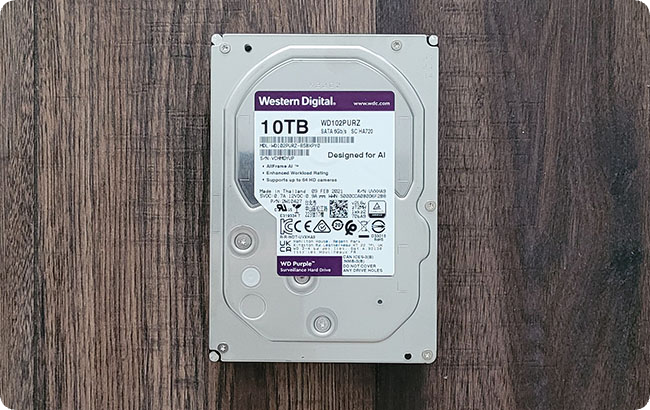
Seagate looks even tighter. At its earnings call in late October, the company reported that the great majority of near-line hard-disk shipped capacity is already allocated through 2028 under long-term agreements, with procurement deals from some cloud providers reaching 2030.
Unit volumes are rising and so are prices. Flash beats disk decisively on random read and write, yet for cloud providers keeping enormous datasets online for the long run, the cost per terabyte still belongs to disk. A growing AI industry produces training data, model files and generated content without pause, and what the data centre needs is not only faster SSD but disk that supplies tens of PB and hundreds of PB at a tolerable price.
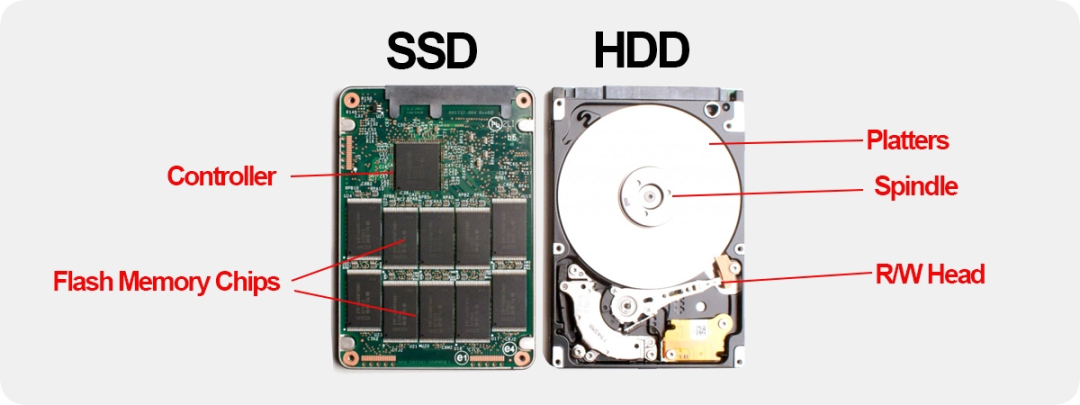
Hard disks carry their own penalties: as capacity per drive climbs, random-access capability does not improve in step, and rebuilding after a failure can take longer. For a cloud operator, though, disk stays justified as long as cost, capacity density and access speed clear the business threshold. Our scorecard on apple vs the hyperscalers vs thin-margin oems covers the same bargaining shift on the flash side.
Could glass or object storage end the tape cycle early?
Not inside this investment's payback window.
In February 2026 Microsoft Research published its latest Project Silica results in Nature. Using femtosecond laser pulses to inscribe data inside glass, researchers achieved 4.8TB of storage in a piece about 12 cm square and 2 mm thick, and accelerated-aging tests support a projection that the data could survive more than 10,000 years.
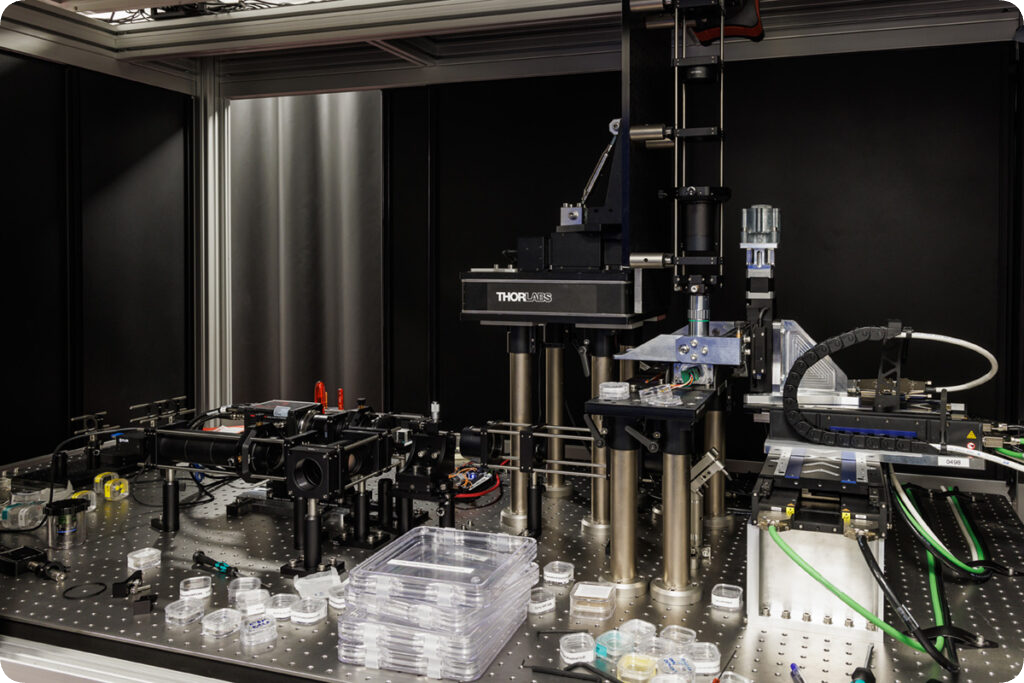
Scale economics remain far away, but the result defines a second path for long-term archiving. The AI data landscape is therefore unusually two-sided: Fujifilm is still tuning coating processes that run back decades in order to pack tens of TB into a cassette the size of a hand, while Microsoft is testing writing information into glass, not unlike carving it into stone.
GlobalBizSight bottom line: the AI cycle is usually narrated through accelerators and model releases, but the binding constraint is moving to cost per retained byte. Fujifilm's execution at the Odawara site, and whether shipped capacity keeps compounding past fiscal 2028, are the two tests that decide whether this is a durable franchise or a one-off catch-up order book. Reader corrections can be sent to info@globalbizsight.com; this report is filed under GlobalBizSight CompanyWatch by Marc Hale.
Common misconceptions that misprice this trade
- "Tape is a consumer relic." Enterprise LTO media is unrelated to audio cassettes; it is already the default long-term layer for exabyte-scale estates such as CERN.
- "100TB per cartridge is what I will actually store." That figure depends on the ideal 2.5:1 compression ratio, which incompressible AI payloads will not deliver.
- "Tape means week-long restores." LTO-10 sustains up to 1200MB/s sequentially, and robotic libraries remove human handling.
- "Fivefold capacity means fivefold cartridge sales." Both the expansion target and the 176.5EB and 160.3EB statistics count shipped storage volume.
- "Buying media is a one-time cost." Because an LTO-10 drive reads only LTO-10 media, every generation boundary becomes a migration project.
Action checklist by reader type
- Storage and platform owners. Classify data by last access date before negotiating hardware; anything untouched for a quarter and retained for years should have a tape or archive-tier candidate list. Budget for one migration cycle every two LTO generations, and validate that at least one copy stays physically isolated from the network.
- Investors and equity analysts. Do not expect the Odawara programme to change group earnings near-term; instead monitor quarterly LTO shipped capacity against the 57% growth printed in the first quarter of 2026, cartridge price per terabyte, and whether hyperscaler agreements follow the hard-disk pattern of contracts dated to 2028 and 2030. Upstream equipment capacity is a separate bottleneck — our note on asml's order book now runs to 2030 shows how far out supply visibility has stretched.
- Strategy and business development teams. Treat media scarcity as a negotiating variable: suppliers with sold-out capacity, as Western Digital and Seagate both report, will prefer multi-year commitments, so lock volume only against a retention policy you can defend.
Frequently asked questions
Why is Fujifilm expanding tape capacity now?
Because generative AI created a two-sided storage requirement: data must be readable fast while it is in use, and cheap to hold for years afterwards. Raw corpora, datasets, training logs, checkpoints and model versions accumulate faster than disk budgets, so archiving demand pulled tape back into the build plan.
How much capacity does one modern cartridge hold?
LTO-10 media launched at 30TB in June 2025, with a 40TB version announced that same December and supplied from 2026; at an ideal 2.5:1 compression ratio, theoretical capacity reaches 100TB per cartridge.
Is tape really cheaper than keeping data on disk?
In the specific scenario of storing 100PB over ten years, Fujifilm estimates about 86% lower total cost of ownership and about 95% lower carbon emissions for automated tape versus an all-hard-disk design. The saving comes from offline storage that needs no power or cooling, offset by retrieval latency and scheduled migration.
Should a mid-sized company build a tape library for AI data?
Our analysis: only when cold volume is large enough to amortise a library and a retention obligation is real. Below that threshold, cloud archive tiers or hosted cold storage deliver the same cost profile without owning legacy drives that only read current-generation media.
Who else benefits if cold-data demand keeps rising?
Hard-disk makers first: Western Digital reported calendar 2026 capacity essentially sold out and Seagate has most near-line capacity allocated through 2028, with some cloud contracts reaching 2030. If 580TB-class density ever commercialises, the same AI retention demand would simply buy fewer cartridges per exabyte.
Sources
- Fujifilm newsroom, capacity expansion announcement for data-storage magnetic tape — https://www.fujifilm.com/jp/en/news/hq/14137
- Fujifilm Holdings, Financial Results (Consolidated) for the Fiscal Year Ended March 31, 2026 — https://ir.fujifilm.com/en/investors/ir-news/auto_20260508520086/pdfFile.pdf
- LTO Program, capacity shipments up 57% year on year in the first quarter of 2026, September 2026 — https://www.lto.org/2026/09/lto-capacity-shipments-grow-57-yoy-in-q1-2026-as-ai-and-archive-demand-accelerates/
- LTO Program, technology roadmap extension to Generation 14, September 2022 — https://www.lto.org/2022/09/lto-program-announces-extension-to-the-lto-tape-technology-roadmap-to-generation-14/
- LTO Program, Fujifilm and Sony as Generation 8 media licensees, August 2019 — https://www.lto.org/2019/08/the-lto-program-announces-fujifilm-and-sony-are-now-both-licensees-of-generation-8-technology/
- Blocks & Files, tape media manufacturing as a two-supplier market — https://www.blocksandfiles.com/tape/2020-06-29/fujifilm-points-to-400tb-tape-cartridge-on-the-horizon/1615365