
CompanyWatch Deep Dive: Why Apple Made Face ID the First Priority for iPhone Duo 2 — and What Slips to 2028 if It Misses
Apple has set exactly two priorities for the iPhone Duo 2: Face ID and an Action button — with Face ID, built into the device's outer display, listed first. Bloomberg's Mark Gurman says the engineering timetable is so tight that the feature may miss the launch altogether and instead debut on the iPhone Duo 3 in 2028. That single scheduling detail says more about where the smartphone industry is heading than any spec sheet this cycle.
The context: per a report carried by 9to5mac, the second-generation iPhone Duo is slated for next fall, and beyond routine chip upgrades and camera improvements it is not yet clear what substantive changes it will bring. When a company narrows a roadmap to two named goals, the signal is deliberate — some model years are refreshes, while a few reset what the whole category is judged by. Authentication, on this evidence, is the axis Apple has chosen for its foldable line.
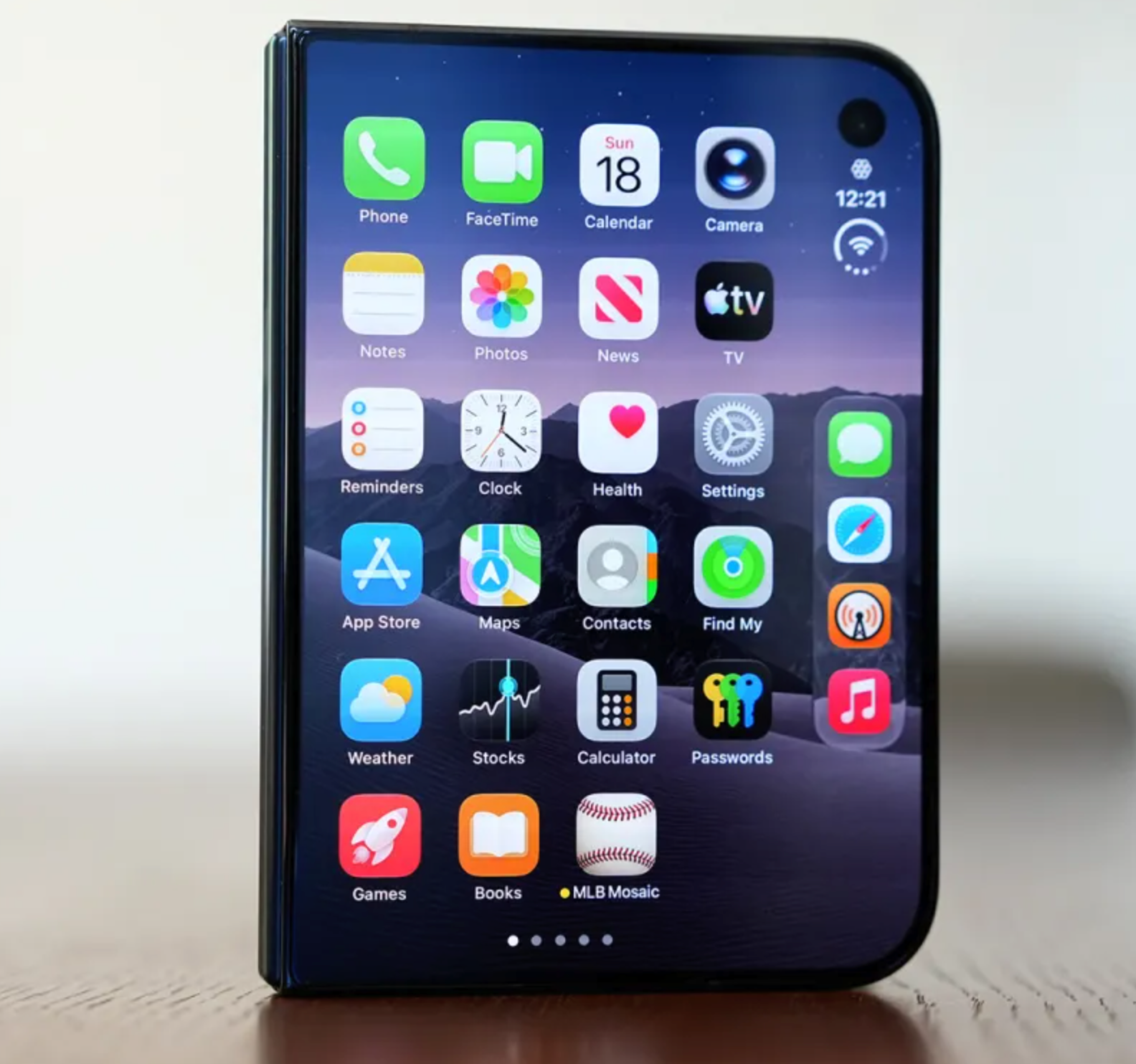
iPhone Duo
What did Mark Gurman actually report?
The short read: one hardware moonshot, one software tweak. Gurman, Bloomberg's longtime Apple correspondent, names the two priorities for the iPhone Duo as Face ID and the Action button. The Action button, in the current plan, may end up as a new software feature inside camera control — one that lets users remap the long-press gesture, replacing the action that currently invokes Siri with a launch of any app they choose. That is a settings change, not a retooling of the assembly line.
Face ID is the opposite case. Gurman says Apple's engineers are "actively working" to bring the technology to the next phone — specifically, into the outer display. His full framing:
"Goals for future generations of the product also include adding a telephoto camera, plus further slimming the body and cutting overall weight. But Face ID is the top priority. As far as I know, Apple has already built an iPhone Duo 2 prototype with Face ID, and engineers are still actively working to integrate the facial recognition system into the outer display of the second-generation model."
He is equally direct about the risk: development time is extremely tight and the technology is not fully ready, so he cannot confirm the feature makes the ship date. If the iPhone Duo 2 launches without it, the likely landing zone is the iPhone Duo 3 in 2028.
Why is Face ID under an outer display so hard?
The direct answer: it is a physics problem before it is a software problem. Face ID's TrueDepth module — the dot projector, flood illuminator and infrared camera that together reconstruct a 3D depth map of a face — was engineered to sit behind a small notch with a mostly clear optical path. Move the same sensors beneath a display and every layer of the screen stack sits between projector and face, attenuating infrared light and warping the projected dot pattern the depth map depends on.
Apple's own security bar compounds the difficulty. Its face-biometrics requirement targets a false-match rate at the one-in-a-million level — payment-grade authentication, not convenience unlocking — and March 2026 supply-chain reporting already described Apple as "far from" a fully uninterrupted iPhone precisely because under-display Face ID kept hitting snags. The industry backdrop matters too: through 2026, no vendor — Samsung, Huawei or any Android maker — has shipped a foldable with under-display 3D face recognition; side-mounted fingerprint readers remain the category default. Apple would be first to industrialize the technology, not first to attempt it.
There is also a foldable-specific trap: authentication must hold in both postures, folded and open. A module on one screen degrades the other posture; duplicating the module doubles cost and punctures the clean full-screen look that is the product's core selling point. Putting Face ID in the outer display is the engineering answer to that dilemma — which is why it outranks the telephoto camera and the thinner body on the priority list.
Why the timeline is tight: the gen-one supply math
The deadline risk is measurable in the first generation's production record. The iPhone Duo opened for pre-order on October 16 and began shipping on October 23, 2026, at a $1,999 starting price — the highest in iPhone history — with JD.com reservations topping two million before orders opened. Analyst Jeff Pu cut his 2026 shipment forecast from 7 million to 6 million units on hinge constraints, while Apple reportedly raised its 12-month supply target roughly 44%, from 9.7 million to 14 million units. Reported liquid-metal hinge yields ran at only about 60-70% against Apple's internal 85% threshold, with final assembly yield around 60% by mid-September.
The connection to Face ID timing is structural, not rhetorical: the engineering bandwidth that would integrate a depth-sensing module into a display is shared with the teams still fixing those yields. As this desk argued in our earlier piece on the foldable ramp, the remedy is shared forecasting and firm volume commitments across connector, hinge and flexible-board suppliers — feature slips and yield shortfalls are two symptoms of the same thin margin for error.
How big is the prize? The 2027 foldable math
The commercial case for gambling on Face ID now: 2027 is shaping up as the category's first high-volume year. TrendForce put Apple's foldable share at roughly 24.8% of the global foldable market in 2026, behind Samsung's 35.1%; DigiTimes projects foldable market growth of 25.7% in 2026 and 59.1% in 2027. Volume forecasts for the Duo line diverge widely, and the spread itself is the message — nobody is confident about the yield curve:
| Source | iPhone Duo volume forecast | Basis |
|---|---|---|
| TrendForce | ~5 million (2026) | Effective-yield read; implies 24.8% global foldable share |
| Counterpoint Research | ~6 million (2026) | Ramp capped by supply |
| Jeff Pu, GF Securities | 6 million (2026), cut from 7 million | Hinge constraints |
| IDC | ~7 million (2026) | About 3% of Apple's 2026 total |
| Goldman Sachs | 13 million (2026); 33 million (2027) | Assumes fast yield ramp |
| Apple supply target (reported) | 14 million over 12 months | Demand signal, not verified output |
Against that backdrop, authentication parity with the standard iPhone stops being a spec-sheet detail. Face ID is the credential layer for payments and app access across Apple's ecosystem; a foldable that cannot authenticate the way a slab phone does is functionally a second-class device in that ecosystem. The playbook here is old: as we noted when marking the iPod's 25th anniversary, Apple's form-factor bets succeed when they converge back into the platform — the iPod mattered less for playing music than for becoming the gateway to what came after. Ming-Chi Kuo's expectation that the second-generation foldable enters mass production in the second half of 2027 with up to 20 million units built that year — roughly three times the first generation's plan — is exactly why a one-generation slip for Face ID carries real commercial weight.
Common misconceptions about the Duo 2 roadmap
- "No Face ID means Apple is behind." The evidence reads the other way: no foldable on any platform ships under-display 3D face recognition; the constraint is industry-wide component miniaturization.
- "The Action button is a hardware redesign." Gurman's reporting suggests it may ship as a software remap inside camera control. Treat it as a UX change unless component orders say otherwise.
- "A 2028 debut means failure." The gen-one record — yield rework, a mid-cycle 44% supply raise — suggests a one-generation slip is how this program absorbs hard hardware problems.
- "Under-display Face ID is like under-display cameras." Camera quality degrades gracefully; face authentication that underperforms fails a security threshold and cannot ship for payments at all.
What to watch: five tracking indicators
For investors and strategy teams, the rumor cycle is noise. These signals actually update the probability of Face ID making the fall 2027 window:
- Prototype-to-production transition: whether the existing iPhone Duo 2 Face ID prototype moves from validation builds to pilot production lines by mid-2027.
- Yield crossing 85%: the hinge and final-assembly threshold Apple reportedly requires — integration work draws on the same teams.
- Component orders: infrared dot-projector and flood-illuminator parts appearing in the foldable bill of materials, the clearest tell that integration is real.
- Price tier: whether the Duo 2 holds a $1,999-class starting price; absorbing a TrueDepth module into a thinner body at the same price would signal genuine industrialization.
- Category growth data: 2027 foldable shipments against the ~59% growth projection, which sets how much authentication parity is commercially worth.
The actionable line: underwrite the 2028 case as the base scenario for Duo Face ID and treat on-time delivery next fall as upside. Nothing in the current supply data supports pricing the feature into fall 2027 with confidence.
FAQ: iPhone Duo 2, Face ID and the Action button
When will the iPhone Duo 2 launch?
Per the report carried by 9to5mac, next fall. The first-generation iPhone Duo shipped October 23, 2026, so a fall 2027 window fits Apple's annual cadence.
What happens if Face ID misses the launch?
Mark Gurman cannot confirm it makes the ship date, citing extremely tight development time and incomplete readiness. The likely landing zone is then the iPhone Duo 3 in 2028.
What is the Action button?
One of the two named priorities for the iPhone Duo. In the current plan it may be a software feature within camera control, letting users remap the long-press action — replacing Siri invocation with any app they choose.
Why prioritize Face ID over a telephoto camera?
Because authentication is the ecosystem's credential layer — payments, app access, device trust — and no foldable currently matches a slab iPhone on it. A telephoto camera upgrades a feature; Face ID closes a gap users hit every time the device unlocks.
Is under-display Face ID proven anywhere?
No. Through 2026 no manufacturer has shipped a foldable with under-display 3D face recognition, and Apple's own path to a fully uninterrupted display has hit repeated snags per March 2026 reporting.
Sources and further reading
- MacRumors, "Apple Still 'Far From' Full-Screen iPhone as Hidden Face ID Hits Snags," March 24, 2026 — https://www.macrumors.com/2026/03/24/apple-still-far-from-full-screen-iphone/
- TechNews, hinge constraints cut the 2026 iPhone Duo forecast to 6 million units, September 16, 2026 — https://technews.tw/2026/09/16/2026-iphone-duo-shipment
- HardwareZone, Kuo on second-generation foldable mass production in H2 2027 with up to 20 million units — https://www.hardwarezone.com.sg/tech-news-apple-first-foldable-iphone-rumoured-specs-production-launch-date
- 36kr, JD.com reservations for the iPhone Duo exceeded two million — https://eu.36kr.com/en/p/4027331458536073
- Antutu, four planned upgrades for the next Duo per Gurman's November reporting — https://www.antutu.com/doc/138435
The closing line for decision-makers: in hardware, the durable advantage goes not to whoever announces the feature first, but to whoever industrializes the hard part first and turns it into an authentication standard the rest of the ecosystem must adopt.