
CompanyWatch Case File: Apple's OLED iPad Ladder and the iPad Air Switch Set for 2027
Apple is expected to move the iPad Air to OLED in the first half of 2027, ending LCD on both sizes and making the mid-tier tablet the third iPad line built on the technology. The date is the smaller story. The delay is the interesting one, and two earlier rollouts — the iPad Pro's OLED switch in 2024 and the 8.5-inch OLED iPad mini that went on sale this November — explain why Apple is only now willing to put this panel on a tablet most buyers can actually afford.
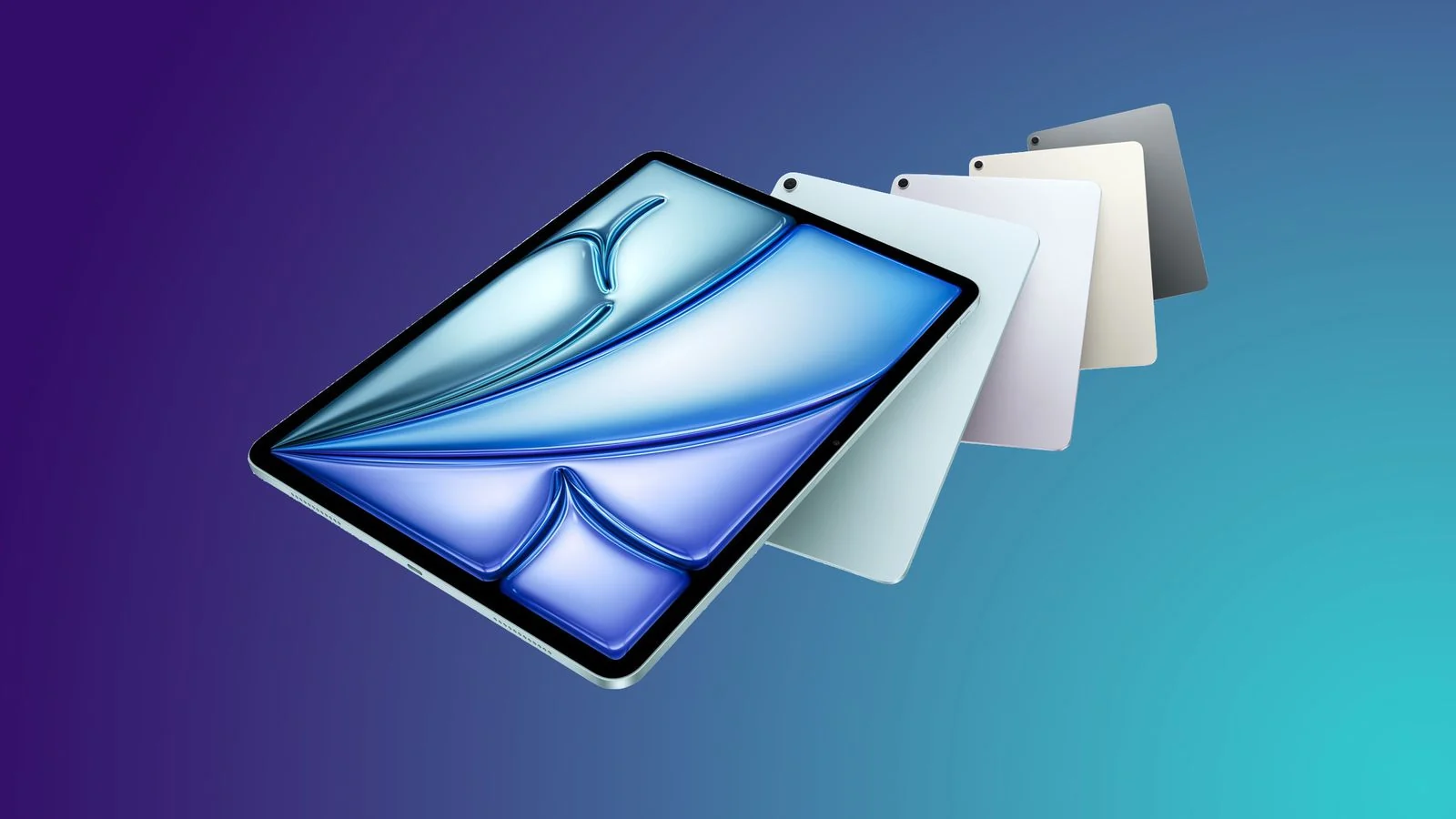
What changes in 2027, and what Apple is deliberately keeping off the Air
The conclusion: the panel changes and the supplier map changes, but the Air's interaction ceiling does not. Apple is upgrading the screen while holding it at 60Hz, so the distance between Air and Pro survives the upgrade.
This rumour has now run for more than a year. In October 2025 the report was that Apple had an OLED iPad Air in development, launching no earlier than 2027. Later leaks narrowed the window to the first half of 2027, and the newest round added shipment forecasts plus panel allocation.
Industry estimates for 2027 put OLED iPad Air and OLED iPad mini shipments at 4 million to 5 million units each, with the OLED iPad Pro at about 3 million to 4 million units. The Air and Pro figures each count both screen-size models. Read those numbers against the market backdrop rather than as standalone Apple targets: Omdia said on November 17, 2025 that OLED tablet panel shipments would climb 39% year on year to 15 million units in 2026, with LCD tablet panels roughly flat near 286.4 million. Its April 2026 Display Dynamics note then cut the whole 2026 tablet panel estimate to 286.3 million units, an 8.3% decline, while OLED iPad panels rose 27% and LCD iPad panels fell 17%. OLED is winning share inside a smaller box — this is a mix upgrade, not a volume boom.
Why did this take so long? Lesson one: what OLED did to iPad Pro demand
Conclusion first: Apple waited because the premium-display case had already been run, and the bill arrived.
Forecast sales of the iPad Pro today sit clearly below the pre-launch ambition of roughly 10 million units per year, and people close to the supply chain point to the higher price as a key reason demand missed expectations.
The 2024 file is documented. Display Supply Chain Consultants analyst Ross Young wrote in October 2024 that first-year panel shipments for the OLED iPad Pro would land near 7 million against the original 10 million plan, with the 13-inch model — priced from US$1,299 — the weak leg next to the 11-inch at US$999 and an iPad Air starting at US$599. CompanyWatch reads this as the decisive lesson: tandem OLED arrived bundled with LTPO, ProMotion and a price step, so the display never got a chance to work as a mainstream upgrade argument. Moving the Air to OLED without ProMotion is how Apple retries the same technology with the pricing baggage detached.
Lesson two: the 8.5-inch OLED iPad mini is the test bench the Air reuses
Conclusion first: the mini proved the cheaper OLED recipe scales, and that is what unblocks the Air in the first half of 2027.
The iPad Pro introduced OLED first, in 2024; the iPad mini with an 8.5-inch OLED panel followed when it launched this November. If the Air lands as reported, it becomes the third iPad line to make the switch, and the iPad Air with the M4 chip — still on LCD today — is the model that gets replaced in that sequence. Reporting says the Air will use a single-layer emissive structure close to the OLED iPad mini's, paired with an LTPS (low-temperature polycrystalline silicon) backplane, which is the cost-appropriate OLED recipe; the Pro keeps a two-layer structure for higher brightness plus the more advanced LTPO (low-temperature polycrystalline oxide) backplane. Omdia's November 2025 analysis attributed most of 2026's OLED tablet growth to Apple's own iPad Pro and iPad mini demand — an Air conversion extends that pattern instead of breaking it.
For the shelf-date side of this, our earlier file on Apple's November 6 launch of the OLED iPad mini, M6 iMac and MacBook Pro covers how Apple sequences OLED across the rest of its hardware.
Who wins which size — and where the supply risk sits
Conclusion first: the display design is settled; the open variable is whether BOE clears Apple's qualification gate.
Samsung Display is expected to carry the main panel supply for the OLED iPad Air. BOE is pursuing the order for one size variant of the product, but still has to pass Apple's supplier qualification. MacRumors reported in August 2026 that BOE was aiming at a secondary role behind Samsung Display and that Apple could decide on BOE's production qualification around November. Two sources at the Air tier is a price mechanism; one source is a schedule risk — the launch would sit on a single supplier's line loading and its yield curve. If Samsung also secures the iPad mini orders, it becomes the largest supplier of Apple's OLED iPad panels, while LG Display is expected to keep leading iPad Pro OLED supply.
| iPad line (OLED) | Expected lead supplier | Second source status | Panel structure |
|---|---|---|---|
| iPad Air | Samsung Display | BOE chasing one size variant, pending Apple qualification | single-layer + LTPS |
| iPad mini | Samsung in contention | not reported | single-layer, similar to the Air |
| iPad Pro | LG Display | not reported | two-layer + LTPO |
Panel makers are also competing on how OLED is manufactured, not only on how many panels they ship — see our read on Samsung Display and LG Display's Apple OLED process pivot. That process work is the quiet lever under any 2027 price negotiation, and it is the variable most coverage of this story ignores.
Is the Air's OLED a real OLED? Read the panel table first
Conclusion first: full OLED contrast and thinner construction, but not the Pro's variable refresh.
| Spec | OLED iPad Air | OLED iPad Pro |
|---|---|---|
| Emissive structure | single-layer, similar to the OLED iPad mini | two-layer (tandem) |
| Backplane | LTPS (low-temperature polycrystalline silicon) | LTPO (low-temperature polycrystalline oxide) |
| Refresh rate | expected to stay at 60Hz | ProMotion, 10Hz to 120Hz |
LTPO matters because its oxide transistors let each pixel hold charge longer between refreshes, so a static image can be refreshed less often and draw less power. That is what enables the iPad Pro's ProMotion system to move across 10Hz to 120Hz. Information leaked so far says the OLED iPad Air will keep 60Hz, which means ProMotion stays an iPad Pro exclusive and Apple's tablet positioning split gets sharper rather than softer. The industry's own tiering supports that reading: Omdia forecast on April 24, 2025 that tandem structures would reach a 36% share of the OLED tablet and notebook panel market in 2026 — still the premium minority slice of OLED supply.
Five misconceptions to drop before the 2027 cycle
- OLED on the Air brings 120Hz. It does not. Refresh rate is a backplane and tuning decision, and the Air is expected to hold 60Hz.
- OLED means a cheaper or free upgrade. A new panel structure plus a new supplier mix is a cost line; the open question is whether Apple prices the Air up or absorbs it.
- Both suppliers are already signed. BOE must still clear Apple qualification for the one size variant it is chasing.
- 4 million to 5 million units is Apple's plan. Those are industry forecasts, and the Air and Pro figures each cover two screen-size models.
- The M4 iPad Air on shelves will be retrofitted. The OLED move belongs to the next generation, expected in the first half of 2027, not to current stock.
What to track next — and what to do about it
- BOE qualification result. A pass means a two-source Air tier and firmer panel pricing; a miss concentrates the launch on Samsung Display.
- Samsung Display's tablet line allocation. Winning both the Air and the mini orders would make it Apple's biggest OLED iPad panel supplier.
- Whether the Air keeps 60Hz. If ProMotion ever moves down, the Air/Pro separation has to be rebuilt somewhere else.
- Price sheet behaviour. OLED plus unchanged pricing is a margin decision; OLED plus a price step repeats the iPad Pro demand pattern.
- Chip cadence. The Air has been an M4 machine; a display-only generation would signal that Apple is spending the upgrade on the panel, not the platform.
- Shipment tracking in 2027. Compare realised Air volumes against the 4 million to 5 million forecast band, and Pro volumes against the same band's smaller Pro estimate.
For component suppliers and business-development teams, the addressable opening is narrow but real: one size variant, single-layer LTPS capacity, and a qualification calendar. For investors and analysts, the more useful question is not whether the Air gets OLED but whether Apple can price OLED without repeating the iPad Pro demand miss. For product planners inside the tablet and PC ecosystem, the reusable pattern is this — retire a technology from the mid tier last, and let a smaller, less visible line validate the yield before the volume model switches.
FAQ: what readers ask about the OLED iPad Air file
Will the iPad Air really switch to OLED in 2027?
Supply-chain reporting points to the first half of 2027 for both sizes, ending LCD on the model line. No Apple announcement has confirmed the timing, and the story has already been revised twice in more than a year of circulation.
Does OLED make the Air faster?
No. This is a display change. The performance question belongs to the silicon generation, and the M4 iPad Air remains the LCD reference point until the OLED model ships.
Which iPad lines already have OLED?
Two: the iPad Pro adopted OLED in 2024, and the 8.5-inch iPad mini shipped with OLED this November. The Air would be the third.
Why does the Air not get ProMotion?
Because the Air is expected to use a single-layer structure with an LTPS backplane, while variable refresh from 10Hz to 120Hz depends on LTPO hardware that Apple has reserved for the Pro. Keeping 60Hz on the Air also protects Pro's pricing.
Who should investors watch outside Apple?
Samsung Display first, then BOE's qualification outcome, then LG Display's hold on iPad Pro panels. Panel share here tracks Apple's cost curve more closely than any design leak.
CompanyWatch bottom line: the division Apple is defending is not LCD against OLED, it is the display every buyer can have against the interaction only professionals pay for — and any partner betting on this transition should plan around the 60Hz line, not the panel logo.
Sources
- Omdia, "Tablet OLED display shipments to grow 39% YoY in 2026 while LCD remains stable", November 17, 2025 — https://omdia.tech.informa.com/pr/2025/nov/tablet-oled-display-shipments-to-grow-39percent-yoy-in-2026-while-lcd-remains-stable
- Omdia, Display Dynamics April 2026, "Tablet panel shipments may drop by 8.3% YoY in 2026" — https://omdia.tech.informa.com/om145278/display-dynamics--april-2026-tablet-panel-shipments-may-drop-by-83-yoy-in-2026
- Omdia via Business Wire, "Tandem Penetration Forecast to Reach 36% Share of OLED Tablet and Notebook Panel Market in 2026", April 24, 2025 — https://www.businesswire.com/news/home/20250424217085/en/Omdia-Tandem-Penetration-Forecast-to-Reach-36-Share-of-OLED-Tablet-and-Notebook-Panel-Market-in-2026
- MacRumors, "iPad Air OLED Panel Orders Could Be Split With BOE in 2027", August 11, 2026 — https://www.macrumors.com/2026-08-11/ipad-air-oled-panel-orders-could-be-split-with-boe/
- AppleInsider, "Apple's ultra-thin OLED iPad Pro fails to spark sales surge", October 9, 2024 — https://appleinsider.com/articles/24/10/09/apples-ultra-thin-oled-ipad-pro-fails-to-spark-sales-surge
- CNMO / Tencent News summary of DSCC Ross Young's October 2024 iPad Pro tracking — https://news.qq.com/rain/a/20241010A010XH00
- GSMarena, "Samsung Display tipped to lead OLED supply for 2027 iPad Air", November 6, 2026 — https://www.gsmarena.com/samsung_display_tipped_to_lead_oled_supply_for_2027_ipad_air-news-75387.php