
CompanyWatch: The Jensen Huang Board Probe — Why Nvidia's Founder Risk Is Now a Governance Test
By Marc Hale | GlobalBizSight CompanyWatch
Nvidia's board of directors opened an independent investigation on November 8, 2026 into whether founder and CEO Jensen Huang had been targeted by a foreign intelligence effort — announced the same day he told employees in an internal memo that he had been unfaithful to his wife, Lori. The other party, Alice Huang, is an executive at Megaspeed, a Singapore-based Nvidia customer. What now faces investors is not a marriage story but a conflict-of-interest test around the rationed GPU supply Huang controls.
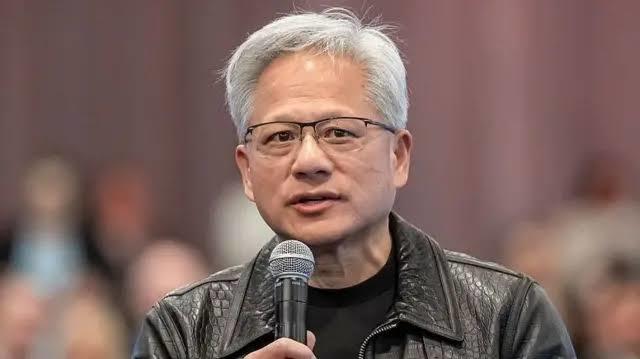
Jensen Huang
The chronology matters, because it shows how fast a private admission became a corporate agenda item. Reporting that Nvidia's chief executive was being treated as a person of interest in a Chinese espionage case surfaced on October 29, 2026; Huang then owned the personal half of the story to staff, and the board moved on the same day. Nvidia is the most valuable technology company in the world, carrying a market capitalization of roughly $4.5 trillion on November 8, 2026 according to Macrotrends data, in a boom where one accelerator card can decide whether a data-centre project ships at all. Trillions of dollars of market value now hang on judgments made by a single executive whose household has become public property.
What is the Nvidia investigation actually examining?
Conclusion first: this is a board-ordered review run by outside counsel, not a government enforcement case. Directors said they see no reason to believe that US national security information or Nvidia confidential data was compromised, while reserving judgment until every available piece of information is examined; Huang endorsed the review, promised to cooperate and said he would continue to lead the company without interruption, and the board repeated its confidence in him and his management team. The company has separately signalled that the inquiry will not slow Nvidia down.
Two structural facts — largely missing from the first wave of coverage — decide how much authority that review carries. First, Nvidia's board sits at 11 members, and Huang is the only director who is not independent; the probe is being handled by a committee of independent directors supported by external lawyers, which keeps the subject of the investigation out of decisions about his own case. Second, Nvidia has no dual-class or super-voting share structure. According to the company's 2026 proxy statement, Huang beneficially owned about 870 million shares, equal to 3.58% of the outstanding stock, as of March 23, 2026. The man who has run the company for decades, and whose marriage to Lori has lasted more than four decades, is in voting terms one shareholder among many.
The scope looks wider than an affair. Business Insider reported that the review places Huang's dealings with Megaspeed, his years-long advocacy for selling chips into China and his role in US AI policy under fresh scrutiny. Read that as a governance audit with a personal trigger, rather than a personal audit with a legal tail.
Why does a customer's executive become a compliance question?
Conclusion: because Megaspeed buys exactly what Huang allocates. Alice Huang is an executive at Singapore-based Megaspeed, a commercial customer of Nvidia that CBS News described as one of the group's largest buyers in Southeast Asia. When compute is the scarcest input in the technology economy, an intimate relationship between the person who sets allocation priorities and a senior figure at a purchasing customer raises two uncomfortable questions: were key commercial judgments made at arm's length, and did confidential information travel along with the relationship?

Jensen Huang and Alice Huang
The compliance paper trail predates the personal one, and that is where the board's urgency becomes legible. Singaporean and US authorities were reported on October 10, 2025 to be examining Megaspeed for potential export-control violations. On October 14, 2025, US Senator Tom Cotton asked the Commerce Department to investigate the company for allegedly diverting Nvidia chips. Bloomberg reported on December 22, 2025 that Megaspeed had imported tens of thousands more chips than Nvidia observed when it checked its data centres. In its October 29, 2026 account, The New York Times noted that Nvidia had looked into the customer before and treated it as a regional account like any other.
GlobalBizSight analysis: a consensual private relationship is not, by itself, a US securities-law violation. The exposure runs through three specific channels — a tainted procurement or allocation decision, an undisclosed conflict of interest affecting a commercial counterparty, and information transfer that intersects with export controls. All three sit inside the scope the board has described, which is why directors are running the review rather than the human-resources function.
Has Silicon Valley seen this before? A precedent scoreboard
Conclusion first: in the technology industry, careers end on policy breaches and shareholder fights, not on private morality. Bezos and Musk kept their jobs after very public marital collapses; Krzanich lost his on a written rule; Rubin's exit package became a reform trigger; Gates absorbed reputational damage without a boardroom consequence. Nvidia's outcome will turn on which pattern the findings resemble.
Bill Gates: 27 years of public image, and the leverage Epstein held
Before Huang, the most painful collapse of Silicon Valley's “devoted husband” archetype belonged to Microsoft co-founder Bill Gates. For 27 years Gates and his then-wife, Melinda French Gates, presented the most stable charitable partnership among US technology billionaires. In May 2021 the couple announced a divorce; with no prenuptial agreement signed, the division of as much as $130 billion in jointly built wealth held Wall Street's breath for months. What sat beneath the amicable language only came into the open in 2026.
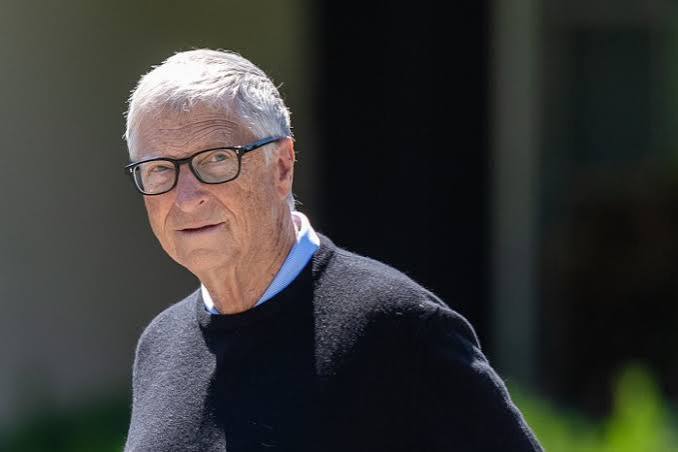
Bill Gates
At a Gates Foundation all-staff meeting in February 2026, the 70-year-old Gates publicly acknowledged fault. He admitted affairs with two Russian women and disclosed that, during the 2021 divorce proceedings, he had been accused of involvement in more than 20 extramarital relationships. On June 10, 2026, at a closed-door hearing held by the US House Committee on Oversight and Government Reform into the affairs of the late financier Jeffrey Epstein, Gates gave a detailed account of three affairs; the published transcript runs to 138 pages. The women identified were Mila Antonova, a Russian bridge player he met around 2010; Karima Nigmatulina, a nuclear physicist trained at the Massachusetts Institute of Technology who had worked at TerraPower, the nuclear venture he backed; and Alice Jacobs Nesselrode, a US health-care entrepreneur holding a Harvard medical doctorate.

Bill Gates and Mila Antonova
The governance lesson is the coercion that sat behind the gossip. Gates told lawmakers that Epstein had known about his marital infidelity, had funded Antonova's programming training and had used that leverage to press him to keep the relationship alive — a scandal that has now run for several years and reached the charity's balance sheet. The Gates Foundation said on April 21, 2026 that it had authorised an external review of its Epstein ties, carried out by the law firm WilmerHale, whose report released on July 21, 2026 found no wrongdoing by the foundation; the institution still plans to cut as many as 500 roles, about 20% of its staff, by 2030 as it squeezes costs.
Jeff Bezos: the $38 billion price of a 25-year marriage
Where the Gates sequence played out as a slow suspense story, Amazon founder Jeff Bezos's affair was a priced, capital-market sprint. In 2019 tabloid disclosure of a relationship between Bezos and Lauren Sánchez — a friend of his wife MacKenzie Scott — ended a marriage of 25 years. Bezos's personal fortune then stood at $137.2 billion, and the settlement handed MacKenzie Scott 4% of Amazon, worth about $38 billion at the time, making her the third-wealthiest woman in the world overnight.
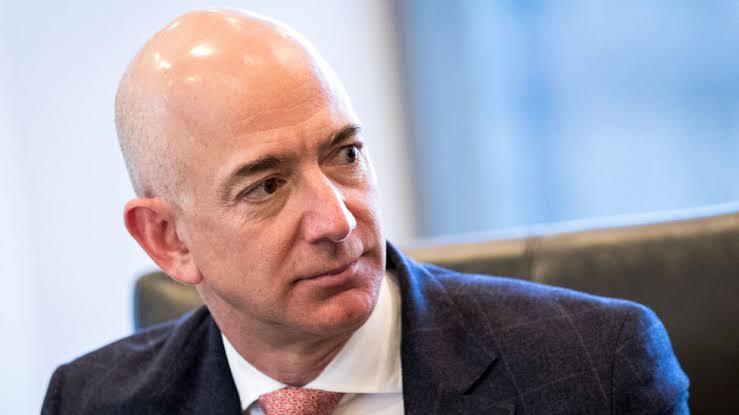
Jeff Bezos
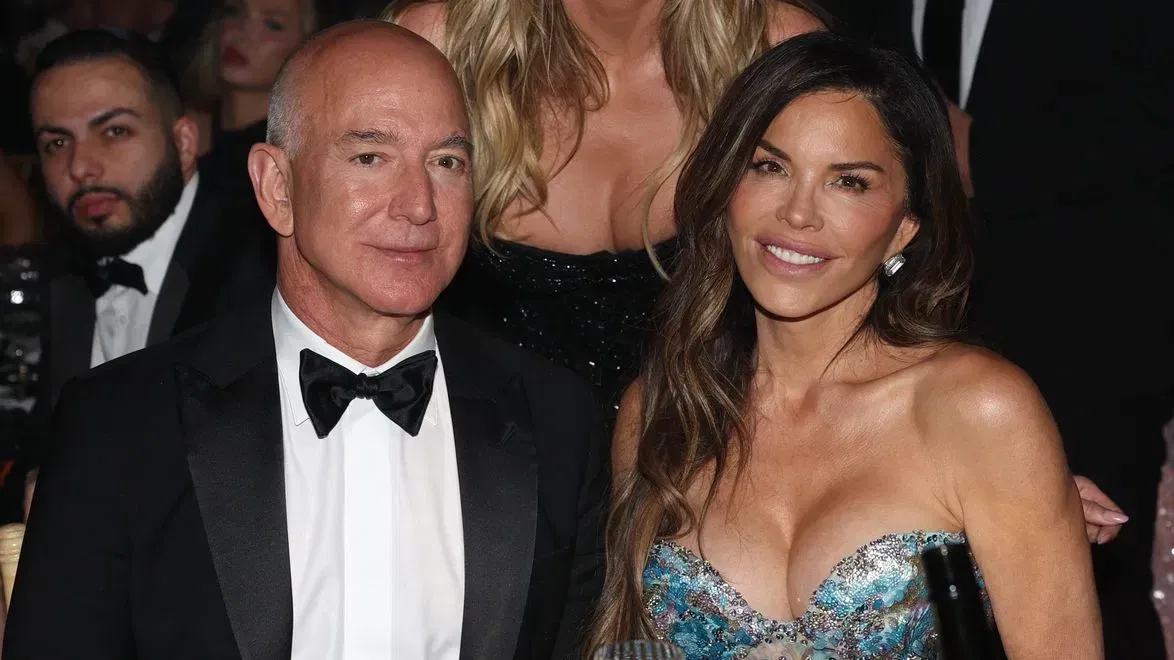
Jeff Bezos and Lauren Sánchez
A carefully drawn voting-rights arrangement kept Bezos in control of Amazon. Even so, that $38 billion transfer remains the reference case Wall Street uses when it prices a “founder moral-hazard discount” into a company built on one person.
Sergey Brin and Elon Musk: the betrayer who became the betrayed
Google co-founder Sergey Brin has played both roles in the same script. In 2013, after eight years of marriage to Anne Wojcicki, the founder of genetic-testing company 23andMe, Brin separated; the divorce was finalised in 2015. The rupture was traced to an office relationship with Amanda Rosenberg, a colleague on the Google Glass team who was also a friend of Wojcicki. Because a prenuptial agreement existed, Google's ownership architecture was never at risk.
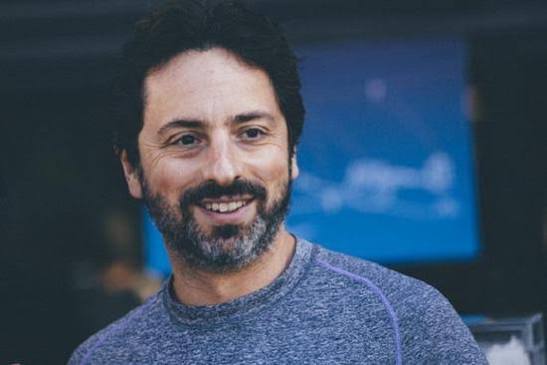
Sergey Brin

Amanda Rosenberg
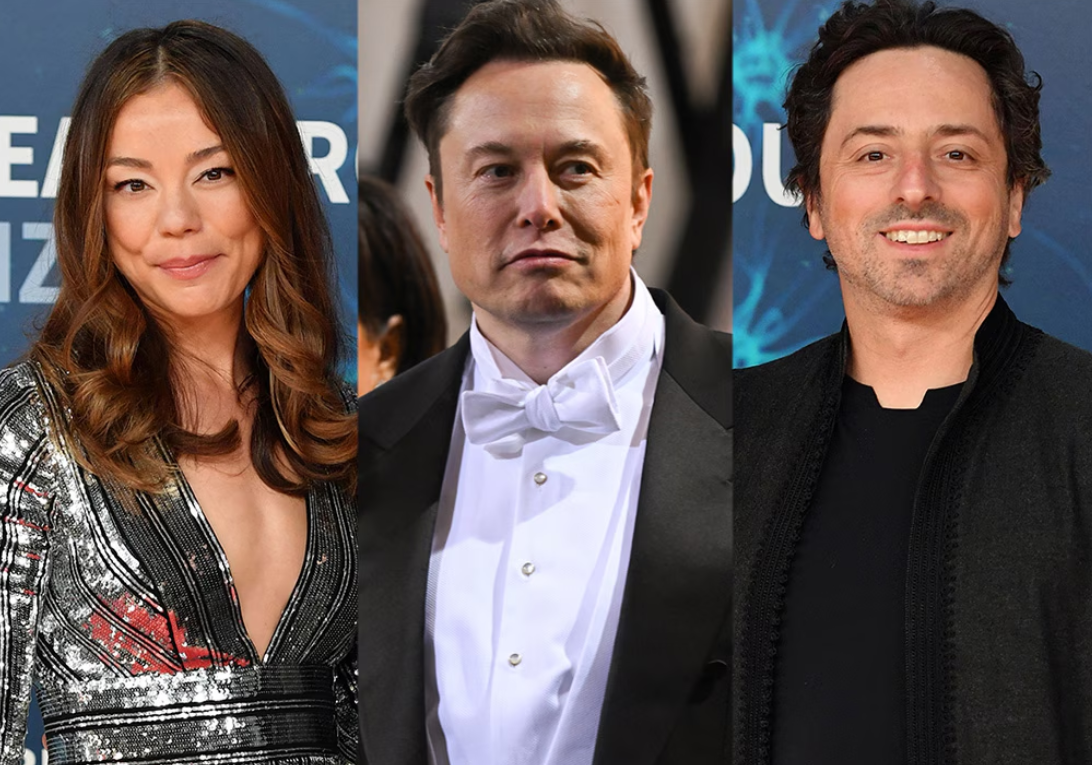
Eight years later the boomerang landed. In early December 2021 The Wall Street Journal reported that Tesla CEO Elon Musk had a brief affair with Brin's second wife, Nicole Shanahan, during Art Basel in Miami — a period when pandemic restrictions and infant-care strain had already cracked the marriage. Brin filed in January 2022 and, according to media reports, told his wealth manager to sell his personal holdings in companies controlled by Musk. Press coverage described Musk dropping to one knee at a party to beg forgiveness; Musk dismissed the reports as “bullshit” on social media, but the rift between the two technology titans was not repairable. Their friendship had a commercial history: during the 2008 financial crisis, when Tesla was close to insolvency, it was Brin's money that helped keep it alive, and in 2015 Musk handed Brin one of the first all-electric Tesla SUVs off the line as a thank-you. Around the same period Musk was also reported to have fathered a pair of twins with a female executive at his brain-interface company Neuralink, and investors openly questioned how he allocated his attention.
Brian Krzanich and Andy Rubin: the two red lines that end careers
Why do some founders survive and others fall? On June 21, 2018 Intel published its second-quarter results guidance and announced the resignation of CEO Brian Krzanich in the same statement. An internal investigation had confirmed a past, consensual relationship with one Intel employee; the company's written rule barred any manager — including the chief executive — from an intimate relationship with someone reporting to them directly or indirectly. The relationship had already ended. It did not save his job.
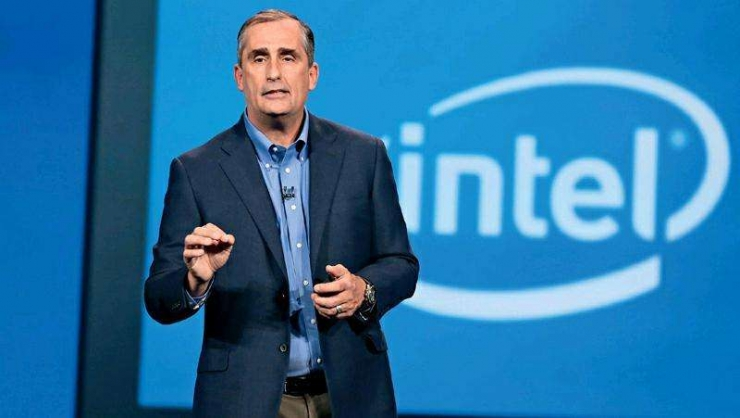
Brian Krzanich

Krzanich's affair partner
The second red line is concealment. In October 2018 a New York Times investigation revealed that Google had known about misconduct claims against “Android father” Andy Rubin when he left in 2014 and had still paid him an exit package of as much as $90 million. Employees staged global walkouts, and the episode forced Silicon Valley to rewrite rules on executive severance and mandatory arbitration.
Travis Kalanick: the precedent boards cite when they want an exit
For the mechanics of a board-versus-founder standoff, the most-quoted modern precedent is Uber. The company published the executive summary of an outside review led by former US attorney general Eric Holder's law firm on June 13, 2017; that review had examined 215 complaints about workplace culture and conduct. One week later, on June 20, 2017, co-founder and CEO Travis Kalanick resigned under shareholder pressure, remaining on the board until the end of 2019. Harvard Business Review's analysis of the episode, published in November 2017, put the test plainly: directors move against a founder once the cost of the controversy exceeds the value of the person. Nothing in Nvidia's disclosures yet suggests that arithmetic has flipped — but the review is exactly the instrument that would let it.
| Case | What surfaced | Mechanism triggered | Outcome |
|---|---|---|---|
| Bill Gates / Microsoft | Three affairs in a 138-page transcript; Epstein leverage | Foundation-ordered external review (April–July 2026) | No boardroom action; reputational strain and a 20% staff-reduction plan |
| Jeff Bezos / Amazon | 2019 affair ending a 25-year marriage | Divorce settlement plus voting agreement | Control retained; $38 billion equity transfer |
| Sergey Brin / Google | 2013 office affair; 2021 betrayal by Musk | Prenuptial agreement | Share structure untouched; friendship and investment links severed |
| Elon Musk / Tesla | Miami Art Basel episode; Neuralink twins | Media disclosure, investor commentary | No board action; key-man attention risk repriced |
| Brian Krzanich / Intel | Past consensual relationship with one employee | Written non-fraternization rule | Resigned on June 21, 2018 |
| Andy Rubin / Google | Claims concealed at a 2014 exit | Press investigation, employee walkouts | $90 million package scrutinised; policies rewritten |
| Travis Kalanick / Uber | Oversight and culture failures | Outside review plus investor pressure | Out as CEO on June 20, 2017; board seat gone by end-2019 |
| Jensen Huang / Nvidia (live) | Affair with an executive at a Nvidia customer; suspected foreign-intelligence targeting | Independent-director review with external counsel | Still CEO; findings pending |
What does Nvidia have to disclose, and on what clock?
Conclusion: the disclosure trigger is narrow, so a quiet filing queue does not mean a quiet board. US listed companies must report a change to, or a waiver of, a code-of-ethics provision that applies to the chief executive on Form 8-K under Item 5.05, generally within four business days, and must report the departure of a director or executive officer under Item 5.02; the SEC's own guide to reading an 8-K sets out that framework. Personal conduct alone does not create a filing obligation. Conflict-of-interest handling typically surfaces later, in risk-factor language in the quarterly and annual reports and in the compensation and related-party sections of the annual proxy statement.
Four misconceptions about a CEO misconduct probe
- An investigation means removal is coming. Intel's Krzanich was pushed out because a written policy had been breached. Nvidia's review examines an alleged conflict involving a customer; no equivalent policy finding has been announced.
- A private scandal automatically damages the share price. Amazon absorbed a $38 billion equity split in 2019 without losing control or investor confidence, because voting rights were ring-fenced.
- A board probe is a regulator probe. Outside counsel reporting to independent directors is a corporate instrument. The export-control interest of US and Singaporean authorities in the Megaspeed story is a separate, and older, track.
- Founder ownership protects a CEO. With roughly 3.58% of shares and no dual-class structure, Huang's personal stake is far smaller than the control stakes that sheltered Bezos or Musk in their own crises.
Three dated checkpoints that will shape the story
- November 17, 2026 — fiscal third-quarter results. Nvidia has scheduled its conference call for that date. Expect questions on whether allocation, procurement and customer-vetting controls are being tightened, and whether governance distracts from the recent buyback debate among holders.
- November 18, 2026 — Washington. Chinese financial outlet Wall Street CN reported that three US House committees have asked Huang to attend a closed-door briefing the day after the earnings call, which would move the episode from compliance into the policy arena that Nvidia's China business already occupies.
- Undated — the findings themselves. Watch for a Form 8-K under Item 5.02 or 5.05, for related-party and conflict language in the 2027 proxy, and for any expansion of the audit committee's mandate.
Treat prediction markets as noise: odds on Huang leaving before December 31, 2026 spiked above 75% before settling near 17%, and the board has published no timetable for finishing its work.
What to act on now
- Holders: separate the governance discount from the demand story, and re-read Nvidia's key-person risk language before the call rather than after it.
- Analysts: ask directly whether the review covers channel and allocation approvals for customers in restricted-marketing jurisdictions.
- Counterparties and procurement teams: request written conflict-of-interest attestations and escalation paths for any relationship touching a customer executive.
- Compliance functions: benchmark your own code of conduct against the Intel rule — an explicit, written ban is enforceable; a vague standard is not.
- Risk owners: diarise the 8-K items above. A filing under Item 5.05 would signal a waiver granted, which historically is what triggers litigation and shareholder activism.
Reader questions on the Nvidia board probe
Is Jensen Huang still CEO?
Yes. He has said he will continue to lead the company without interruption, has pledged to cooperate with the review, and the board has restated its confidence in him and the management team.
Who is running the investigation, and can they be independent of him?
A committee of independent directors, advised by external lawyers. Ten of Nvidia's 11 board seats are classified as independent, and Huang is the only management director, so the review does not report to its own subject.
What is Megaspeed, and why does it matter here?
A Singapore-based computing company and Nvidia customer. Scrutiny of its chip flows by Singaporean and US authorities dates back to 2025, which converts a personal relationship into a customer-conflict question.
Has anyone accused Huang of leaking information?
No public allegation of a leak has been made against him; the board's stated framing is that he may have been the target of a foreign intelligence effort, and it has said there is no current reason to believe US national security or Nvidia confidential information was harmed.
Does an affair by itself breach US securities rules?
No. The reporting question is whether a code-of-ethics provision was waived or an officer departs, and whether any undisclosed related-party conflict affected business decisions.
The CompanyWatch verdict
Read across the precedents, the pattern is consistent: Silicon Valley tolerates private failure and punishes written-rule failure and concealment. Huang's exposure is therefore narrower than the headlines imply — but the mechanism that could widen it has already been switched on. Nvidia is one of the few trillion-dollar companies whose brand, roadmap and Washington relationships are embodied in a single founder, and the market has just learned that this founder's private life is now audited by independent directors with external counsel and no published deadline. The decisive variable is not sympathy. Hedge-fund manager Bill Ackman urged exactly that, arguing that “even outstanding people make mistakes, and he has taken full responsibility”. For holders, customers and counterparties the question is what the review concludes about the fairness of decisions involving Megaspeed — and whether the answer arrives before or after November 17.
Sources and further reading
- Bloomberg — Nvidia board to probe spying case after CEO admits infidelity (November 8, 2026)
- The New York Times — Nvidia chief seen as target of Chinese spy plot (October 29, 2026)
- The Wall Street Journal — Board to investigate reports of a spying target (2026)
- Business Insider — What Huang has said about China as the spying probe opens (November 2026)
- CNBC — Singapore and US investigate Nvidia client Megaspeed (October 10, 2025)
- Reuters — US senator seeks Commerce Department investigation into Megaspeed (October 14, 2025)
- Time — Google employees walk out over handling of harassment claims (November 2018)
- US House Committee on Oversight — Gates transcript release (June 23, 2026)
- WilmerHale review of the Gates Foundation's Epstein ties (July 21, 2026)
- Reuters — Uber CEO resigns under investor pressure (June 20, 2017)
- Harvard Business Review — When Founders Go Too Far (November 2017)
- Yahoo Finance — How much Nvidia stock Jensen Huang holds (2026 proxy data)
- US Securities and Exchange Commission, Investor.gov — How to Read an 8-K
- Wall Street CN — board composition, independent-director review and the November 17–18 calendars (November 9, 2026)
- Macrotrends — Nvidia market capitalisation series, November 8, 2026