
CompanyWatch Guide: How Koito Turns BYD and AITO Tear-Downs Into a Standardization, AI and Sourcing Playbook
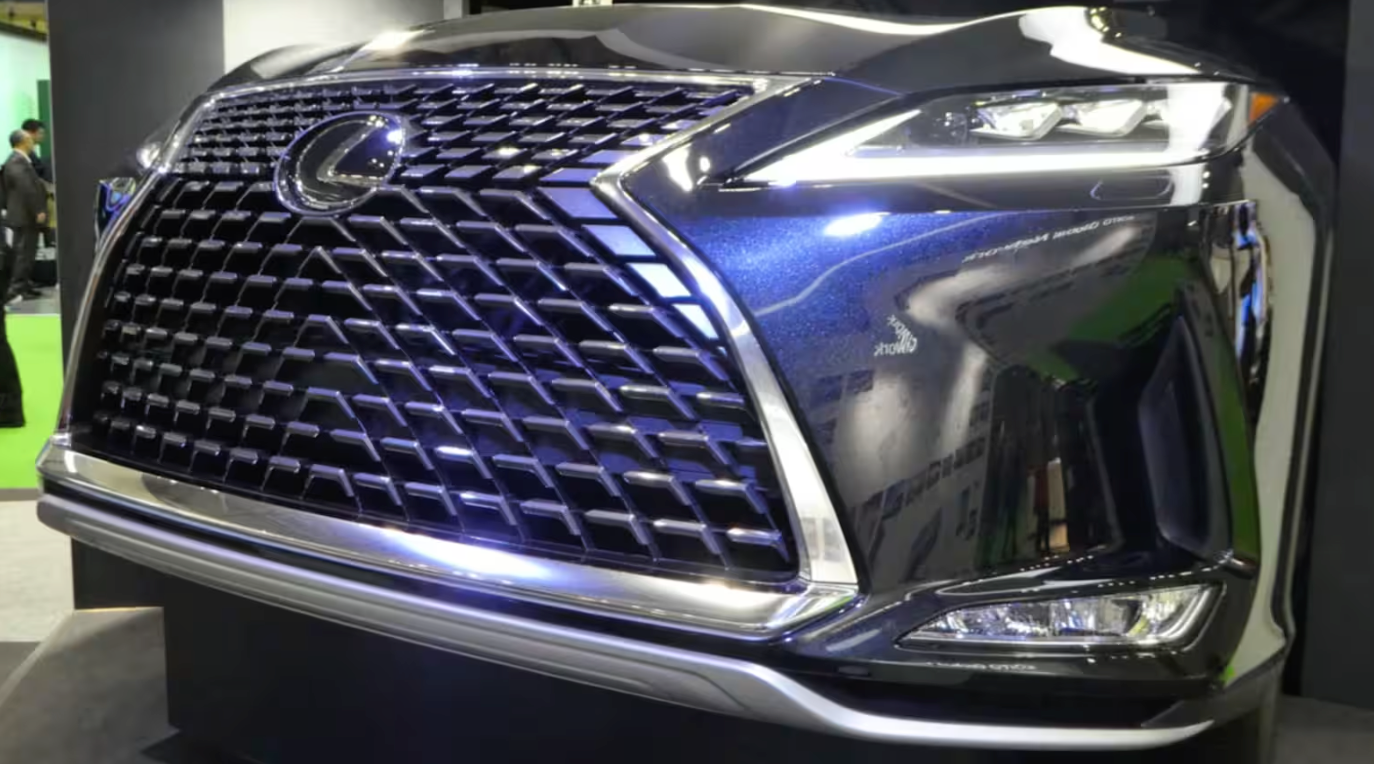
Koito Manufacturing is answering a price benchmark set in China with a four-part reset: tear down about 100 lamps every year, standardize light units so visually different lamps share internal parts, buy cheaper plastics from China once quality and supply-chain checks pass, and move AI from the shop floor into development, targeting design workload roughly 30% lower in fiscal 2030 than in fiscal 2025. This GlobalBizSight CompanyWatch guide converts that plan into steps, numbers, failure modes and a 90-day tracking checklist.
By Marc Hale, GlobalBizSight CompanyWatch — enterprise dynamics, supply-chain shift and competitive response.
What did the tear-down room actually find?
Conclusion first: Koito's problem is structural cost architecture, not styling. Its flagship plant in Shizuoka Prefecture in central Japan houses a "competitor analysis room" filled with automotive lamps from around the world. Every year the company takes apart about 100 products there, examining structure, materials and the number of light beads; combined with a separate standalone warehouse, the collection totals about 600 headlamps.
Chinese products are on the bench, including lamps from BYD and from AITO, the brand co-developed by Huawei and Seres. "I don't understand how they can achieve that price," said one Koito engineer who first noticed the change in Chinese products about three years ago. "At this rate, we are going to lose." Executive Vice President Masami Uchiyama has made the shift official policy: "China's prices have now become the industry benchmark," he told staff, urging employees to learn from Chinese rivals.
How does Koito plan to close the gap? The five-step playbook
The plan runs from benchmark to bill of materials to the factory floor, with AI as the accelerant. Read as a sequence, it looks like this:
- Benchmark, don't guess. Tear-downs feed a component-level price map of Chinese rivals — the diagnostic that made Uchiyama accept a Chinese price floor.
- Standardize internal architecture. Light units and similar parts that were previously designed per vehicle model will be commonized; lamps with different exterior designs will share identical internal components, and larger purchase volumes on fewer part numbers should lower procurement cost.
- Re-source materials, gated by quality. Koito plans to buy lower-cost plastics and other products from China after confirming quality and supply-chain reliability. "As long as it meets our quality standards, the cheaper the better," Uchiyama said. The company has already identified a route that can halve the cost of the next-generation light unit.
- Automate changeover, not just assembly. At one plant in Shizuoka Prefecture, AI-equipped cameras and robots help move components, removing the need to rebuild equipment each time the vehicle model changes.
- Put AI into development around 2030. AI will pool historical design data, current regulations and information on similar products, assisting the creation of 3D data and performance simulation; the stated goal is to cut design workload by about 30% in fiscal 2030 versus fiscal 2025.
Which numbers frame the bet?
The plan is being executed from a position of recovering profitability, not distress — which matters because it means the 2030 targets are defense of a high, not a rescue.
| Indicator | Value | Source / timing |
|---|---|---|
| Net sales, first half of fiscal 2026 (April-September 2026) | ¥478.1bn, up 7.0% year on year | Koito consolidated earnings report, 28 October 2026 |
| Operating profit, first half of fiscal 2026 | ¥30.7bn, up 54.8% year on year | Same report; roughly ¥25bn had been guided |
| Full-year fiscal 2026 guidance (year ending March 31, 2027) | Net sales ¥955bn; operating profit ¥61bn | Guidance revision, raised about 1.7% from ¥60bn |
| Next-generation light unit cost | Halving route identified | Koito, via Nikkei Asia reporting, November 9, 2026 |
| Design workload | About 30% lower in fiscal 2030 vs fiscal 2025 | Koito target as reported |
| Estimated share of global automotive lighting | About 25%; Koito plus Stanley Electric above 70% combined | ResearchInChina industry report |
For scale, third-party analysts put the automotive lighting market at roughly USD 31.27bn in 2026, reaching USD 45.87bn by 2033 at a 5.6% compound rate, with the field consolidated among a handful of specialists. That is not a market where volume growth alone closes a 30-point price gap; the gap has to come out of engineering hours, part counts, resin and changeover flexibility.
Why is the China footprint shrinking while sourcing expands?
Two moves that look contradictory are actually one logic: keep low-cost access, shed overcapacity. Koito has decided to close two plants in China and concentrate operations in Guangzhou, a sign of how hard the Japanese-brand slowdown is on suppliers — Koito's large customers include Toyota and other Japanese brands, and most of its China sales historically went to Japanese automakers. The paper trail is public: the company announced on April 1, 2025 that it would dissolve and liquidate its Fuzhou lamp subsidiary, and on October 20, 2026 that its board, at a meeting on September 28, 2026, resolved to dissolve and liquidate Hubei Koito Automotive Lamp, with no significant effect expected on consolidated results for fiscal 2026, the year ending March 31, 2027.
At the same time Koito is adding Chinese and other non-Japanese customers — it wants more business with BYD and other Chinese automakers and with Tata Motors in India. The demand side, however, is uneven: Seres, the partner behind the AITO brand whose lamps Koito has been tearing down, reported 27,037 units sold in October 2026, down 50.29% year on year, with third-quarter revenue off 41.66%. Learning from Chinese price structures is prudent even when individual Chinese customers are volatile.
Where the plan can fail: four practical risks
1. Standardization collides with brand differentiation
Common internal parts are an engineering decision the customer must accept. Headlamp design is a brand signature and a programme-specific tooling decision, so part commonality is realized model cycle by model cycle, not on Koito's schedule.
2. Materials substitution is gated by type approval, not only by internal QA
Headlamps are regulated road illumination devices under UN Regulation No. 149, so changes to lens or reflector materials and optical surfaces can reopen approval work. A cheaper resin only reduces cost after qualification and customer sign-off — plan the saving with a certification lag, not at the purchase-order date.
3. Supplier stability risk transfers to you
The Chinese cost model is aggressive and fast-adjusting: Changzhou Xingyu Automotive Lighting Systems, the country's largest lamp supplier, hired 440 graduates from the class of 2026 and then terminated 107 of them weeks later in August 2026, an episode that forced a public apology and a three-month living subsidy. For a Japanese Tier-1 qualifying Chinese resin and component vendors, labour-cost discipline of this kind signals both price elasticity and counterparty-reliability exposure.
4. AI buys engineering hours, not variable cost
Development-side AI arrives around 2030. Until then the benefit is design capacity freed for more customer programmes, not a lower unit price. Automating model changeover at one plant in Shizuoka Prefecture is the nearer-term production lever.
Common misreadings of this story
- Reading the 30% as a price cut. In the plan as reported, the roughly 30% figure is a reduction in design workload in fiscal 2030 versus fiscal 2025; the cost-side claim is the halved cost of the next-generation light unit. Several reprints headline it as a straight production-cost cut.
- Reading tear-downs as imitation. Analysing structure, materials and bead counts is cost-architecture benchmarking; it tells Koito where money is hidden, not what to copy.
- Reading "buy Chinese plastic" as a quality concession. Koito conditions the switch on confirming quality and supply-chain reliability first.
- Reading two plant closures as a China exit. Guangzhou stays, production is concentrated there, and new business with Chinese OEMs and Tata Motors is an explicit target.
Action checklist: what to verify in the next 90 days
- Part-commonality disclosure. In design-in proposals, ask what share of new lamps reuses a common light unit; standardization without a ratio is a slogan.
- First qualified China-sourced material. Track the first announced resin or component approval and the elapsed time from audit to sign-off — that lag sets the real cost-down curve.
- Tooling and changeover capital. Watch equipment and tooling lines in Koito's disclosures for automation beyond that one plant in Shizuoka Prefecture.
- Design headcount and R&D expense trajectory. If design effort falls faster than revenue rises, AI and 3D simulation are working; if both flatline, the fiscal 2030 target slips.
- Guangzhou utilization and the Hubei liquidation close-out, plus whether the stated "no significant effect on fiscal 2026 results" holds in the second-half report.
- Customer-mix proof points: programme wins at BYD or Tata Motors, and how OEMs split architectures between global and China-specific platforms — a pattern visible in Volkswagen's parallel global and China technology tracks.
- Margin defense benchmark. Hold the ¥61bn full-year operating profit guide as the baseline the 2030 plan must not erode.
FAQ: what buyers and analysts ask us
Is Koito really a bellwether for the sector?
Yes. With an estimated share near 25% of global automotive lighting, and more than 70% combined with Stanley Electric, a Koito repricing is a market event, especially for Japanese-brand programmes.
Why does the AI plan start in development rather than production?
Because changeover and geometry work are where cost hides: pooling prior designs, current regulations and product information to generate 3D data and run performance simulation attacks the labour content that per-model customization created.
What does this mean for a competing supplier?
Treat the Chinese price as the tender floor, publish a common-part roadmap early, pre-qualify second-source materials with certification lead time built in, and measure design effort per programme now so the reduction is auditable.
What would prove the plan is working?
Three signals: a standardized light unit in series production across visibly different lamps, a halved-cost next-generation light unit shipping to a non-Japanese customer, and falling design effort per programme by fiscal 2030.
Reference sources
- Koito Manufacturing, Consolidated Earnings Report for the First Half of Fiscal 2026 (October 28, 2026): https://www.koito.co.jp/english/news/docs/Consolidated%20Earnings%20Report%20for%20the%20First%20Half%20of%20Fiscal%202026.pdf
- Koito Manufacturing, announcement on dissolution and liquidation of Hubei Koito (October 20, 2026): https://www.koito.co.jp/english/news/2026-10-20/004646.html
- Koito Manufacturing, announcement on dissolution and liquidation of a Chinese subsidiary (April 1, 2025): https://www.koito.co.jp/english/news/2025-04-01/004445.html
- Nikkei Asia on Koito's tear-down room and China benchmarking (November 9, 2026): https://asia.nikkei.com/business/automobiles/japan-headlight-king-koito-tears-down-chinese-rivals-lamps-for-bright-ideas
- UNECE, UN Regulation No. 149 on road illumination devices: https://unece.org/sites/default/files/2025-02/R149r1am3e.pdf
- MarketsandMarkets, Automotive Lighting Market outlook: https://www.marketsandmarkets.com/ResearchInsight/automotive-lighting-market.asp
- ResearchInChina, Global and China automotive lighting industry report (share estimates): http://www.researchinchina.com/Report/ReportInfo.aspx?id=11587
- Caixin Global on Changzhou Xingyu's graduate terminations and apology (August 28, 2026): https://www.caixinglobal.com/2026-08-28/top-chinese-auto-parts-maker-apologizes-over-abrupt-layoffs-of-recent-graduates-102478874.html
- Wall Street Journal on the Xingyu terminations: https://www.wsj.com/world/china/chinese-company-draws-fire-for-laying-off-100-grads-a-month-after-hiring-them-8a85d785