
CompanyWatch Q&A: What Manus's Web Summit Return Tells Enterprise Buyers Before You Bet on Agentic AI
The durable divide in agentic AI will not be the size of a model. It will be who supplies the identity layer, the permission rails, and the payment plumbing that make autonomous agents irreplaceable infrastructure. Manus's first public appearance on a global stage since the blocked Meta acquisition is less a product showcase than a decision framework for every enterprise buyer, analyst and strategy lead tracking the next wave. Below, GlobalBizSight answers the questions worth asking before placing a 2027 bet.
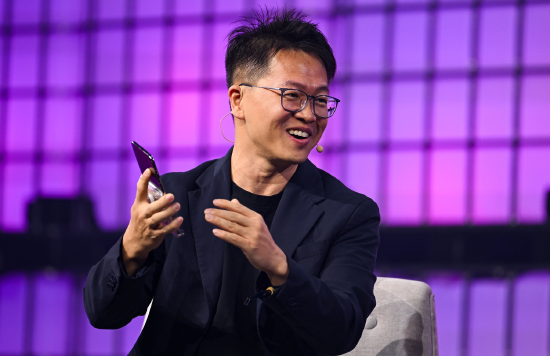
Why Does Zhang Tao's First Public Appearance Since the Meta Incident Matter?
On the evening of November 9 local time, 2026, Web Summit opened in Lisbon, Portugal. In the main-stage opening dialogue, host Casey Lau put the question directly to Manus co-founder and Chief Product Officer Zhang Tao: "This is your first time speaking publicly since the Meta incident. How are you feeling?"
Zhang Tao deflected the post-mortem. "That is what building a company looks like — you always encounter problems that need solving. We cannot predict what comes next, but that is the process. Right now, we are focused on the future," he replied.
Context for that brevity: China's foreign-investment regulator blocked Meta's roughly $2 billion acquisition of Manus on April 27, 2026, ordering the U.S. parent to unwind the deal, as reported by CNBC. On September 1, 2026, Manus formally announced the resumption of independent operations under founders Xiao Hong, Zhang Tao, and Chief Scientist Ji Yichao. Lisbon was the company's first appearance on a global platform since that reset.
What Do Manus 2.0 and Cue Actually Change for Organizations?
Short answer: they move an AI agent from a sandboxed executor to a credentialed entity that can transact in the real world. That is as much a governance question as a technology one.
Tracing the past 20 months, Zhang Tao recalled the origin: "Last March, when we first launched Manus, we were in a sense defining a new category — the general-purpose AI agent. We gave the AI a computer so it could handle a wide range of long-tail tasks through one agent." Manus AI debuted in March 2025 and quickly became one of the most-watched startups in the AI-agent wave, because it delivered completed work — research briefs, websites, presentations — rather than conversational replies.
"Now everyone is building agents that work on a computer. Maybe it is time to take the next step," Zhang Tao said.
On September 28, Manus released Manus 2.0 and simultaneously launched Cue, a product aimed at personal AI-assistant scenarios. The defining upgrade: each agent is provisioned with its own phone number, email address, and digital wallet. Under user-granted authorization, it can make calls, send and read SMS, register for online services, process email, and execute payments within a user-defined budget.
Cue extends the model to multi-agent coordination — one agent sources a venue, another filters proposals, a third builds the deck — giving each a separate digital identity around a shared objective. This is the direction Agentic AI is exploring: not a passive chat window but an executor that parses goals, decomposes work, calls tools, and advances workflows inside permission boundaries.
The timing intersects with a measurable adoption curve. Gartner forecasts that up to 40% of enterprise applications will embed task-specific AI agents by the close of 2026, according to Reported Future's analysis of enterprise AI risk. Manus 2.0 is one concrete answer to that curve — and it raises a security perimeter question that Apple itself has now disclosed as a business risk in its annual filing.
How Is Manus Reshaping Work and Hiring From the Inside?
Zhang Tao opened a window into his own day. Every morning he faces more than 20 to-do items, often 20 to 30 tasks spanning product, marketing, team communication, research, and project execution. "For me, the hardest part is not solving a problem — it is starting a task," he said, referencing his ADHD. He feeds the entire backlog to Manus, which decomposes each item, retrieves context from Notion, Slack, and Gmail, then routes sub-tasks to the right colleague with that context attached. He describes the result as having a Chief of Staff and a PMO in one. He can ask the agent: "What is the current progress on the tasks I hand you every day?" and receive a compiled status report.
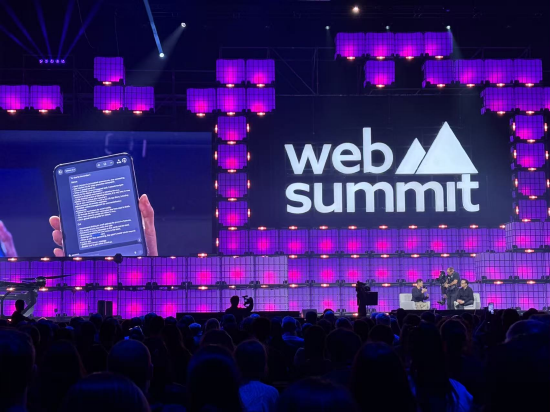
Zhang Tao demonstrates task decomposition through AI agents on the new iPhone Duo during the Web Summit session.
When Casey Lau asked how Manus plans to recruit heading into 2027 — when so much routine execution migrates to AI — Zhang Tao reframed the talent model: "The people we look for are no longer just those who excel at doing things, because AI already excels at doing things. What we truly need are people who can collaborate with AI."
The company has scrapped its conventional coding exam. Engineering candidates now receive a real problem and must complete the task within four hours using Manus. Interviewers review the entire interaction: how the candidate framed questions to the AI, supplied context, adjusted instructions, and leveraged output.
Internally, boundaries blur further. Zhang Tao covers product and marketing; product managers write code and sit in design sessions; designers are expected to program. "In practice, our internal philosophy is that everyone can do anything. We place less weight on job titles and more on who actually gets things done," he said. Specialist roles — front-end, back-end — remain, but the functional walls are dissolving.
Can AI Agents Also Create Content? The Video Demo in Brief
Beyond task orchestration, the session's second live demo addressed creative output. The host noted that Manus 2.0 has integrated video generation and invited Zhang Tao to show how a plain-text instruction becomes a finished clip.
"About a month ago, the public impression of AI-generated video was a flood of inconsistent content that needed repeated prompt-tweaking," Zhang Tao said. "Now users need only describe what they want in very simple language, and the system handles everything from information gathering to final assembly."
His live prompt was fewer than 30 English words: research the 2026 Web Summit and produce a 30-second video for on-stage playback. Manus gathered relevant web data, auto-generated the clip, and delivered it. Zhang Tao assessed the result as a mature product output — concept to completion in one pass.
What Does the Over-$500 Million Round Reveal?
On October 8, Butterfly Effect — Manus's parent company — announced the close of a new funding round exceeding $500 million, co-led by Boyu Capital and IDG Capital, with participation from returning backers Tencent, HSG, and ZhenFund. Per TechCrunch, this was the company's first fundraise since resuming independence. The size suggests investors treated the regulatory block as a forced reset, not a terminal risk. Manus has not disclosed its post-money valuation.
Common Misconceptions About Manus's Position
- "The Meta block weakened the company." The October 8 round — over $500 million — was the first raise after independence, and the September 28 product ships (Manus 2.0, Cue) continued on schedule.
- "A phone number and wallet per agent is a convenience feature." It is a governance event. Once an AI entity transacts financially under delegated authority, enterprises need audit trails, spending ceilings, and liability frameworks before deployment. A 2026 survey by Kiteworks found 48% of security professionals rank agentic AI as the top enterprise attack vector.
- "Manus is simply replacing headcount." Zhang Tao's own description points elsewhere: the firm still recruits specialists, but the evaluation axis has moved from "what you can build alone" to "how well you orchestrate AI."
Tracking Checklist for Decision-Makers in 2027
- Revenue disclosure. Watch whether Manus shifts from a valuation story to usage-based revenue reporting after the $500 million round.
- Permission and audit tooling. Enterprise adoption of Manus 2.0 and Cue depends on granular role-based access, action logging, and spending caps — track each release for these capabilities.
- Hiring-methodology diffusion. If the "solve a real problem with AI in four hours" evaluation spreads beyond Manus, it signals a broader recalibration of technical assessment.
- Regulatory posture. Monitor China and EU rulings on autonomous agents executing payments; Apple's annual-filing risk language on unpredictable AI agents is a leading indicator.
- Multi-agent platform reach. Note any partnerships extending Cue's coordination model beyond internal workflows into third-party SaaS.
Frequently Asked Questions
What exactly is Manus, and why should a non-technical executive care?
Manus is a general-purpose AI agent launched in March 2025. It autonomously plans, calls tools, and completes multi-step work — research reports, code, websites — rather than answering in chat. For a non-technical executive, the relevant question is not the model architecture but the workflow compression: tasks that currently require coordination across Notion, Slack, and Gmail can be handled by one agent with delegated permissions.
What is Cue and how does it differ from Manus 2.0?
Manus 2.0 is the upgraded agent platform. Cue, launched September 28, is a companion app for personal AI-assistant use, where each agent gets its own email, phone number, digital wallet, and computing environment, enabling multiple agents to divide work toward a shared goal. Manus 2.0 is the engine; Cue is the coordination layer.
Is Manus independent from Meta after the deal collapse?
Yes. China blocked Meta's approximately $2 billion acquisition on April 27, 2026, and Manus formally resumed independent operations on September 1, 2026, under founders Xiao Hong, Zhang Tao, and Ji Yichao.
What is the biggest risk of letting AI agents handle payments?
Once an agent holds a digital wallet and can spend within a set budget, a compromised instruction chain or misread context can trigger unauthorized transactions. Security professionals increasingly classify this as a top-tier attack surface. Enterprises should require per-agent spending ceilings, dual-authorization thresholds for high-value actions, and immutable audit logs before granting financial credentials to any AI agent.
The pattern Zhang Tao laid out in Lisbon is consistent with a ten-year thesis: value accrues to whoever makes autonomous agents the default operating layer for work, not to whoever runs the most compelling demo. Decision-makers who treat Manus's Web Summit reappearance as an infrastructure signal — not a news cycle — will be better positioned to judge which agent platforms earn a seat in their stack heading into 2027.
Sources
- CNBC: "China blocks Meta's $2 billion takeover of AI startup Manus," April 27, 2026 — cnbc.com/2026/04/27/meta-manus-china-blocks-acquisition-ai-startup.html
- TechCrunch: "China's Manus raises over $500M in first funding round since split with Meta," October 8, 2026 — techcrunch.com/2026/10/08/chinas-manus-raises-over-500m-in-first-funding-round-since-split-with-meta/
- France24: "AI startup Manus says resumes independent operations," September 1, 2026 — france24.com/en/live-news/20260901-ai-startup-manus-says-resumes-independent-operations
- Reported Future / Gartner: "Emerging Enterprise Security Risks of AI," April 21, 2026 — recordedfuture.com/research/emerging-enterprise-security-risks-of-ai
- Kiteworks: "Agentic AI: Biggest Enterprise Security Threat for 2026," February 9, 2026 — kiteworks.com/cybersecurity-risk-management/agentic-ai-attack-surface-enterprise-security-2026/
- GlobalBizSight: Apple Turns "Unpredictable" AI Agents Into a Disclosed Business Risk
- GlobalBizSight: iPhone Duo's First Two Weeks: What 100,000 Adapted Apps Reveal About Apple's Foldable Ecosystem Bet