
How to Read Anthropic's $1.75 Billion Founder Sell-Off: A CompanyWatch Playbook for the November 18 Pricing
Anthropic's seven co-founders plan to sell about $1.75 billion of stock in next week's IPO, per the latest prospectus disclosed on Tuesday — roughly $250 million each. Read as a verdict, that looks alarming. Read as a slice of a company marked at about $1.4 trillion, it is a scheduled liquidity event with a known date. The variable that decides the story is the price struck on November 18, with trading expected the next day.
For a decade the script was fixed: insiders kept their shares frozen after a listing, and anyone touching stock early was assumed to know something the market did not. The AI-era mega-listing has broken that script. Companies arrive with founder stakes worth tens of billions, cap tables full of paper wealth that employees need to convert, and offering structures that let a disclosed block clear at the same time the company raises. The question for outside investors is no longer whether insiders sell. It is how much supply the market must absorb, and on which dates.
What is actually being sold in Anthropic's IPO, and what is not
Conclusion first: Tuesday's headline covers two separate money flows that are routinely reported as one.
The first is corporate capital. The San Francisco-headquartered company is seeking to raise up to $90.4 billion through the public offering together with a private placement, at a valuation of about $1.4 trillion; that money goes into Anthropic. The second is personal. The seven co-founders are selling for their own accounts at about $250 million a head. Coverage of the filing puts each founder's stake at roughly 1.4% of the company, which explains how a $250 million block can be sold while the same person's remaining holding is valued near $18 billion by the Bloomberg Billionaires Index.
The arithmetic is the useful part. Against a raise ceiling of up to $90.4 billion, the entire founder block is a little under 2% of the shares being put to market (GlobalBizSight calculation on the prospectus figures, not a company statement). Hold that frame before deciding whether the sale means anything.
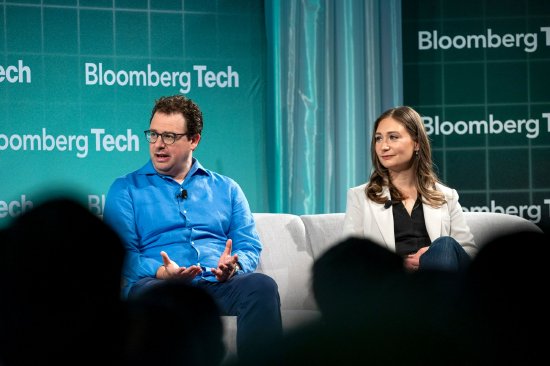
Anthropic co-founders Dario and Daniela Amodei.
Why founder selling once scared buyers, and why Jay R. Ritter reads this case differently
Conclusion: the reflex is old, and it underestimates how far investor tolerance for disclosed insider liquidity has moved.
Jay R. Ritter, professor emeritus at the University of Florida's Warrington College of Business, argues that the combination of Anthropic's relative deal size and a market that has learned to price insider selling makes these sales unlikely to frighten off buyers. The mechanics of the lock-up explain why.
Underwriting agreements customarily freeze insiders for around 180 days after pricing, and Ritter's long-run IPO dataset puts the historical average nearer 188 days. In a normal listing, that expiry is the most predictable supply shock on the calendar, and investors have to guess its size. A block sold at pricing removes one guess: the founder float, the dollar amount and the date are all in public documents before the first trade.
The deal, number by number
| Track | What the filing and deal terms show | Why it matters |
|---|---|---|
| Disclosure | Latest prospectus published on Tuesday | First hard numbers on insider supply rather than rumour |
| Pricing | November 18 | Sets the value of every founder block |
| First trading | The next day | Stabilisation and greenshoe activity begin |
| Company capital | Up to $90.4 billion, IPO plus private placement | Funds compute build-out, not founder wallets |
| Implied valuation | About $1.4 trillion | The denominator for every "how much did they really sell" calculation |
| Founder selling | $1.75 billion across seven co-founders, about $250 million each | Just under 2% of the raise ceiling |
| Founder wealth | About $18 billion each, Bloomberg Billionaires Index | Diversification, not exit |
| Deal desks | Goldman Sachs lead-left, Morgan Stanley as stabilisation agent, 20 further banks, per reporting on the registration statement | Identifies who has the mandate to defend the opening price |
Six steps to track the sale from Tuesday's filing to day one
- Split the flows. Read the company's primary raise and the selling-stockholder table as two separate events. Only the second is founder money.
- Fix the calendar. Pricing on November 18, first trading the next day, and an investor briefing window ahead of both. Our separate field guide to tracking Anthropic's IPO repricing keeps that schedule in one place.
- Measure supply, not headlines. Compare the $1.75 billion block with total shares offered, then judge whether a named stabilisation agent signals a defended range.
- Read the governance overlay. Anthropic is registered as a public benefit corporation, and its Long-Term Benefit Trust is described by the company as an independent body of five trustees with authority to elect and remove board members. Control and ownership are different questions here.
- Diarize the lock-up. Plan on 180 days as convention and check the final prospectus for the actual term; Ritter's average of about 188 days is the realistic date.
- Track the after-market. Insider trades surface in SEC Form 4 filings, generally within two business days, and sales under pre-set 10b5-1 plans read very differently from discretionary dumping.
Four misreadings to drop before the opening bell
- "Founder selling means the founders know something." A block that is disclosed, sized and dated in advance is the least informationally loaded sale available.
- "About $1.4 trillion is the priced value." It is the level attached to the ceiling of the raise, not a print. November 18 decides.
- "Selling weakens founder control." With roughly 1.4% stakes each and a trust-based board mechanism, a $250 million sale shifts influence very little.
- "The supply question closes at listing." The lock-up calendar is where the second and larger wave is set.
Where Anthropic's listing sits in the wider capital cycle
Conclusion: this is the test of whether public markets will fund AI compute at private-market marks.
The valuation conversation has already moved. Anthropic's marketing range has been described as sitting below the most optimistic $2 trillion expectations yet above the $965 billion mark set in the company's last private round, a reset we charted in our guide to Anthropic's IPO valuation reset. Deal-size reporting frames the ask against the largest listings on record, including the roughly $86 billion SpaceX raised in its June debut.
For the rest of the industry the read-across is structural. Whoever clears an offering this size at this level sets the cost of capital for every model lab and, further down the chain, for chipmakers, cloud capacity and the enterprises signing multi-year AI contracts.
Risks, and the signals that would change this read
- Pricing at the top with a thin aftermarket: insider supply is absorbed on paper only.
- Secondary blocks close to lock-up expiry: the $1.75 billion becomes step one rather than the whole plan.
- Governance friction: a trust that can remove directors is unusual in a public company, and invites disputes over accountability and index inclusion.
- Funding-structure risk: a raise that leans on a private placement alongside the public offering concentrates the buyer base.
Action recommendations by role
- Public-market investors: model day one on float and lock-up dates, not on headline sentiment about founder cash-out.
- Enterprise buyers and partners: treat a successful pricing as evidence of funded capacity, then negotiate terms that survive a re-rating if the aftermarket breaks.
- Competitors and suppliers: the clearing valuation becomes your next benchmark; start that conversation before the reference price hardens.
Frequently asked questions
Is $1.75 billion a large founder block for an IPO?
In isolation it ranks among the biggest. Against a company marked at about $1.4 trillion and a raise of up to $90.4 billion, it is roughly two cents of every dollar of new supply.
Does this mean the co-founders are leaving Anthropic?
No. Each of the seven holds roughly 1.4% of the company, and a sale of about $250 million each still leaves net worth near $18 billion on the Bloomberg Billionaires Index measure.
When does Anthropic start trading?
Pricing is planned for November 18, with trading expected to begin the next day under the current deal terms.
What should I watch in the first month after pricing?
Three items: the aftermarket price against the range midpoint, Form 4 filings from insiders, and the lock-up expiry date stated in the final prospectus.
Bottom line for decision-makers
The founders' money leaves in the open, on a published date, in a size the market can absorb. What remains unsettled is whether public investors will pay about $1.4 trillion for a business whose value rests on compute supply and pricing discipline. What separates the durable names in this cycle is not the valuation at pricing, but the ability to become capacity that other companies cannot switch off. Watch the float, not the fortune.
Sources and further reading
- Anthropic, "The Long-Term Benefit Trust": anthropic.com
- Reuters explainer on Anthropic's public benefit corporation structure: reuters.com
- Jay R. Ritter, IPO dataset, University of Florida: site.warrington.ufl.edu
- US Securities and Exchange Commission on insider reporting via Forms 3, 4 and 5: sec.gov
- Investopedia on the standard IPO lock-up period: investopedia.com
- Phoenix Finance on the underwriting line-up and deal structure: finance.ifeng.com
- Tonghuashun Finance, citing S-1 coverage of founder stakes and comparison listings: field.10jqka.com.cn