
GlobalBizSight CompanyWatch: A Practical Guide to the Jensen Huang Return Campaign — Steps, Checklist and Pitfalls
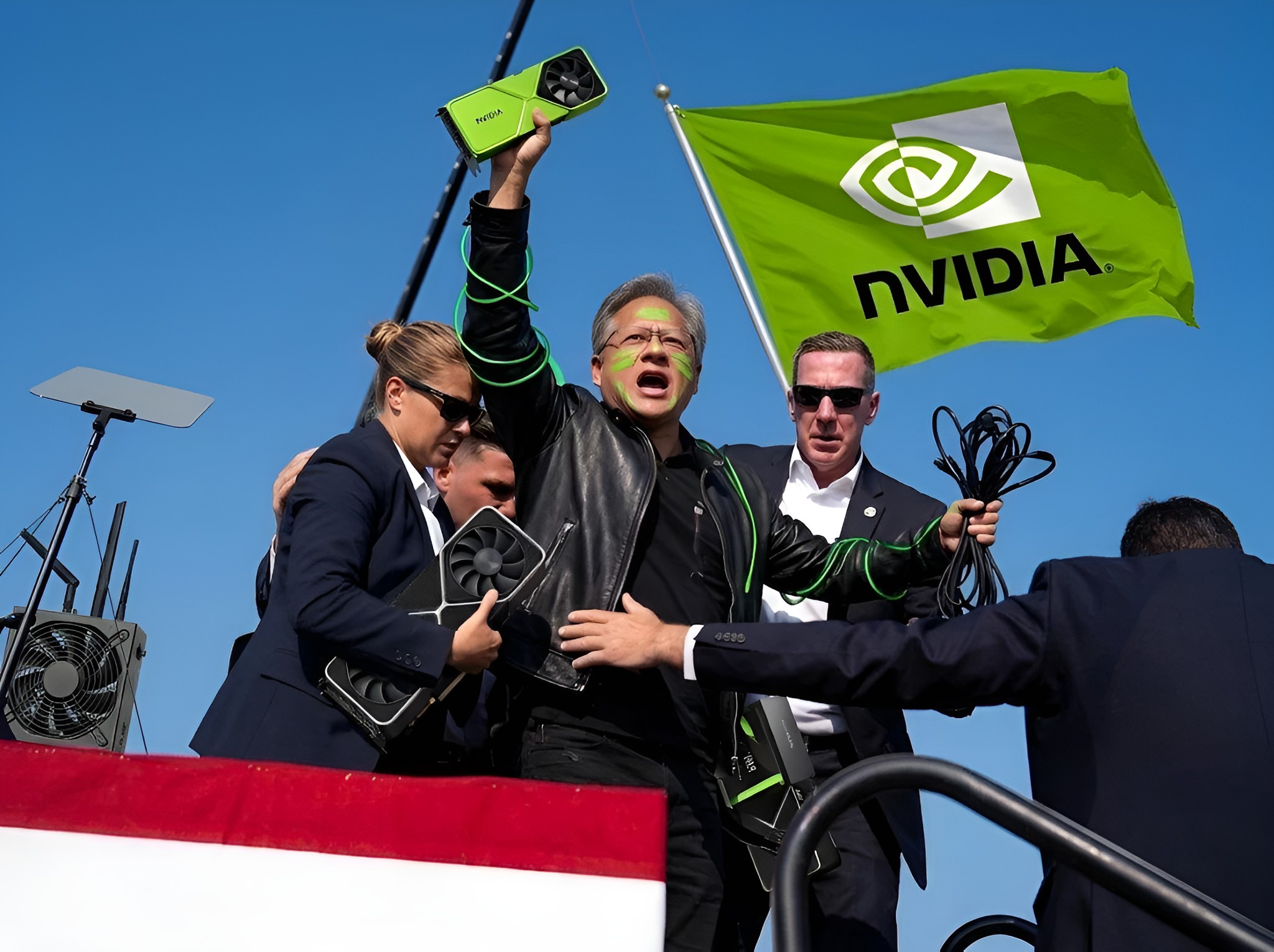
Nvidia posted a record $115.8 billion quarter on Tuesday, 17 November 2026, yet spent the same week unable to settle who should run it. The campaign to bring Jensen Huang back is genuine but structurally limited — a vocal Silicon Valley lobby, not a board slate. This guide gives investors a step-by-step read of what it can achieve, where the market misreads it, and which indicators actually matter.
Bottom line: treat the return effort as sentiment with a narrow legal channel, not an imminent management change.
What is the return campaign, and who is behind it?
It is an informal lobbying effort, not a formal shareholder proposal. According to one of Huang's allies, a "war room" made up of Silicon Valley executives is being assembled to push for the former Nvidia chief executive's return and to pull the White House into the support camp. "Outside the frontier labs, every heavyweight in tech supports Jensen Huang," the ally said, adding that the lobbying carries Huang's own backing.
Throughout the weekend the public pressure built. Tesla and SpaceX chief executive Elon Musk, Epic Games chief executive Tim Sweeney and a group of other executives signed an open letter demanding "Bring Jensen Back." Several employees who signed after his resignation said they still saw strong reason to rally behind him. None of that, on its own, changes who sits on the board.
Why can't Huang simply veto the board?
Because Nvidia is a one-share-one-vote company and his stake is about 3.5%. Huang was the largest individual shareholder but could not decide the board's makeup on his own. That is the crux of the super-voting shares debate that followed his exit: Forbes estimated that a standard ten-vote dual-class structure would have put his voting power near 26%, enough to matter in a contested vote.
There is a narrower channel, though. Under Nvidia's proxy-access bylaw, a shareholder holding more than 3% of voting power for at least three years may nominate directors for the annual ballot; Huang and his foundation cross both thresholds and can put forward up to two independent candidates for the meeting usually held in June (Reuters, 17 November 2026). Nomination is not election — his candidates still need shareholder approval. In plain English: he has a megaphone and a ballot line, not a veto.
What is the root cause the board says it is examining?
A formal independent investigation, not the public campaign, sets the timetable. Nvidia's board retained Wachtell, Lipton, Rosen & Katz, with partner Joon H. Kim — a former acting U.S. attorney — leading the Wachtell investigation into the allegations (CNBC, 12 November 2026). One person involved in the restore effort conceded: "Having an affair with a subordinate is, by itself, a firing offense." Even supporters said they were unsure how to repair his reputation.
The political layer cuts the other way. On Sunday, U.S. Treasury Secretary Scott Bessent said that after Huang left, Nvidia needed a "sweeping leadership overhaul," and people familiar with the campaign expect resistance from core policymakers in Washington. Huang also lacks the controlling stake that would let him reject a board decision.
Which numbers anchor the dispute?
The fundamentals are strong, which is exactly why the governance fight looks anomalous — and why the board can afford to move slowly. Nvidia said on Tuesday, 17 November 2026 that fiscal third-quarter 2027 revenue reached $115.8 billion, up 103% from a year earlier, with Data Center revenue of $107.6 billion, up 110% (NVIDIA investor relations). It guided to about $130.0 billion for the next quarter. Plain-English translation: revenue is the top line, and a 103% jump means it more than doubled year on year.
This was the first earnings call since Huang's departure, with interim chief executive Colette Kress leading the board and management team into the report. Strong operating numbers do not resolve a leadership question; they simply raise the cost of getting it wrong.
Where do investors most often misread this?
Four recurring errors are worth flagging:
- "A war room means a board takeover." It is a lobbying group, not a filed nominee slate.
- "A founder's stake guarantees control." About 3.5% under one-share-one-vote gives no veto.
- "Record earnings settle the leadership question." They separate operating performance from governance.
- "White House backing can install a chief executive." Washington can apply pressure; it does not make the appointment.
What should you track next? A five-step checklist
Watch process, not noise. Five checkpoints, in order:
- Read the Wachtell findings before pricing any comeback scenario.
- Follow the successor shortlist. On Friday, reports said the board had approached Arm chief executive Rene Haas as a potential successor; the board says a formal succession process has not started.
- Track proxy-access nominees ahead of the June annual meeting.
- Monitor statements from Bessent and the White House for policy signal, not for appointment authority.
- Keep operating data separate from governance headlines at each earnings date.
Case in point: On Friday, Altimeter Capital founder Brad Gerstner and Atreides Management head Gavin Baker, both large Nvidia investors, sent the board an open letter urging it to "keep every option open, including the option of Jensen Huang's return." They argued that "Jensen Huang's long tenure produced extraordinary achievements, and the recent events around his departure have created enormous uncertainty." That is influential shareholder pressure — still not a binding vote. Spokespeople for both Nvidia and Huang declined to comment.
FAQ: the questions readers actually ask
Can Huang be reinstated before the annual meeting?
Not through any process the board has formally opened. The board says succession has not started, and the investigation is live. A rapid return would require a board reversal, not a shareholder vote.
Does his stake let him force a decision?
No. He holds roughly 3.5% with one vote per share, so he cannot veto a board resolution. His realistic lever is nominating up to two independent directors via proxy access.
Who is running Nvidia meanwhile?
Interim chief executive Colette Kress is leading the board and management team, including through Tuesday's quarterly report.
Was an outside candidate considered?
Friday's reports named Arm chief executive Rene Haas as a potential successor, though the board says no formal search is under way.
What exactly did Bessent say?
On Sunday he said Nvidia needed a "sweeping leadership overhaul" after Huang's departure — a policy signal, not an appointment.
The investor reminder: do not conflate a company compounding revenue at triple digits with a board that has not yet chosen its leader — those two facts can diverge for several quarters, and the market usually waits for a filing before it reprices the gap.
Author
Felix Allen is an enterprise technology consultant and commercial-analysis writer at GlobalBizSight. Reach the newsroom at info@globalbizsight.com.
Reference sources
- NVIDIA investor relations — Q3 fiscal 2027 results, 17 November 2026: https://investor.nvidia.com/news/press-release-details/2026/NVIDIA-Announces-Financial-Results-for-Third-Quarter-Fiscal-2027/
- Reuters — Huang can nominate two directors, 17 November 2026: https://www.reuters.com/legal/transactional/former-nvidia-ceo-jensen-huang-can-nominate-two-directors-company-board-filings-2026-11-17/
- CNBC — Joon Kim leads investigation, 12 November 2026: https://www.cnbc.com/2026/11/12/nvidia-jensen-huang-joon-kim-wachtell-china-spy.html
- Fortune — voting structure and founder control, 12 November 2026: https://fortune.com/2026/11/12/jensen-huang-nvidia-ceo-resignation-ai-chip-founders-voting-power-board-control-mark-zuckerberg-meta-stock-market/
- Forbes — dual-class estimate, 13 November 2026: https://www.forbes.com/sites/aliciapark/2026/11/13/why-jensen-huangs-firing-couldnt-happen-to-mark-zuckerberg-or-many-other-tech-titans/