
CompanyWatch: Singapore Airlines' SG$2 Billion Cabin Bet Under Review — the Checklist That Matters Before Rollout
By Julian Campbell · GlobalBizSight CompanyWatch · tips and questions: info@globalbizsight.com
The short answer: nothing comes out of the aircraft yet. Singapore Airlines will review the customer feedback that greeted its revamped Business Class cabin and explore refinements, CEO Goh Choon Phong said, while the programme — backed by more than SG$2 billion — remains set to enter service in the second half of 2027. Treat the episode as more than a design row: it is a live test of how a brand-led premium carrier prices identity into a capital-intensive product cycle.
Start with the decade-long trend this sits inside. A long-haul cabin reveal used to be trade-press colour; today it is a balance-sheet event. Premium cabins contribute an outsized share of full-service carriers' revenue — analyses building on IATA data put them at roughly 15–20% of passenger revenue on a small fraction of seats (see McKinsey's breakdown of premium cabin profitability) — and the product cycle behind them runs six to eight years from brief to retrofit. That is why a palette argument at Singapore Airlines deserves a structured read, not a hot take.
Why does a colour debate touch the business case?
Because for this carrier the palette is pricing power, not decoration. SIA sells a brand premium across every cabin, so a visual break in its top-revenue cabin is a commercial variable. The immediate sentiment data show how sharply the reveal landed: social listening by CARMA recorded negative sentiment at 49.4% of conversations about the refresh, against 14.46% positive and 36.14% neutral, with design accounting for 38.2% of monitored conversations — and the Business Class palette drawing the sharpest slice of that attention.
The criticism converged on one visual choice: the grey-and-yellow scheme in Business Class, widely compared online to dental chairs and medical examination rooms, and read by many loyal customers as a departure from the deep blues and golds long tied to the Singapore Airlines name. As we tracked in our earlier note on the launch's mixed netizen reaction, the intensity came less from how the seat functions than from what the colours seemed to say about the brand.
What exactly is inside the SG$2 billion package?
Conclusion first: this is a four-cabin, two-airframe programme, and the money sits where the margin is. Announced in early November 2026, the refresh spans First Class, Business Class, Premium Economy and Economy, with design work split by cabin — PriestmanGoode on First Class, Designworks on Business Class, and Factorydesign on Premium Economy and Economy. It builds on the S$1.1 billion retrofit of 41 long-haul Airbus A350-900s that Singapore Airlines announced in May 2025, with the remainder tied to new-build Boeing 777-9 cabins.
| Cabin | Design house | Seat supplier (reported) | Headline features |
|---|---|---|---|
| First Class | PriestmanGoode | Collins Aerospace | Sliding privacy doors; 32-inch 4K screen; Bang & Olufsen headphones; centre seats convert to a double bed |
| Business Class | Designworks | RECARO Aircraft Seating | 22-inch 4K screen; wireless charging; Bluetooth audio; convertible double-bed mode |
| Premium Economy | Factorydesign | Collins Aerospace | Recline extended by about one inch; refreshed 4K screen |
| Economy | Factorydesign | Collins Aerospace | New trim and fabrics; refreshed 4K entertainment screens |
The cabin spend sits inside a wider premium stack disclosed around the same briefing: more than S$130 million for SilverKris lounge renovation and expansion, Starlink-based cabin Wi-Fi upgrades, over 100 new dishes and — a first — pyjamas for Business Class passengers. Read together, they state the company's thesis plainly: the end-to-end journey, not one cabin's colour, is the product.
Why did six years of research and three agencies still miss on colour?
The uncomfortable conclusion: the research was broad but measured the wrong axis. Singapore Airlines has said the programme drew on more than 5,000 frequent flyers, customers, employees and industry experts through focus groups, interviews, surveys and concept tests, and its May 2025 release described six years of engagement with customers "down to the finest detail." That machinery is well built to optimise function — sleep, dining, storage, connectivity. It is structurally weaker at protecting brand recognition, because respondents evaluate scenarios seat by seat, not the system a traveller experiences across a decade of flights.
Asked why SIA engaged three separate design agencies rather than one, Goh was direct: "Obviously, the requirements for the different cabin classes are quite different from our customers' perspective. What we have done is to choose the most appropriate agency for the needs of that specific business class," he said in remarks carried by CNA and viewed by MARKETING-INTERACTIVE.
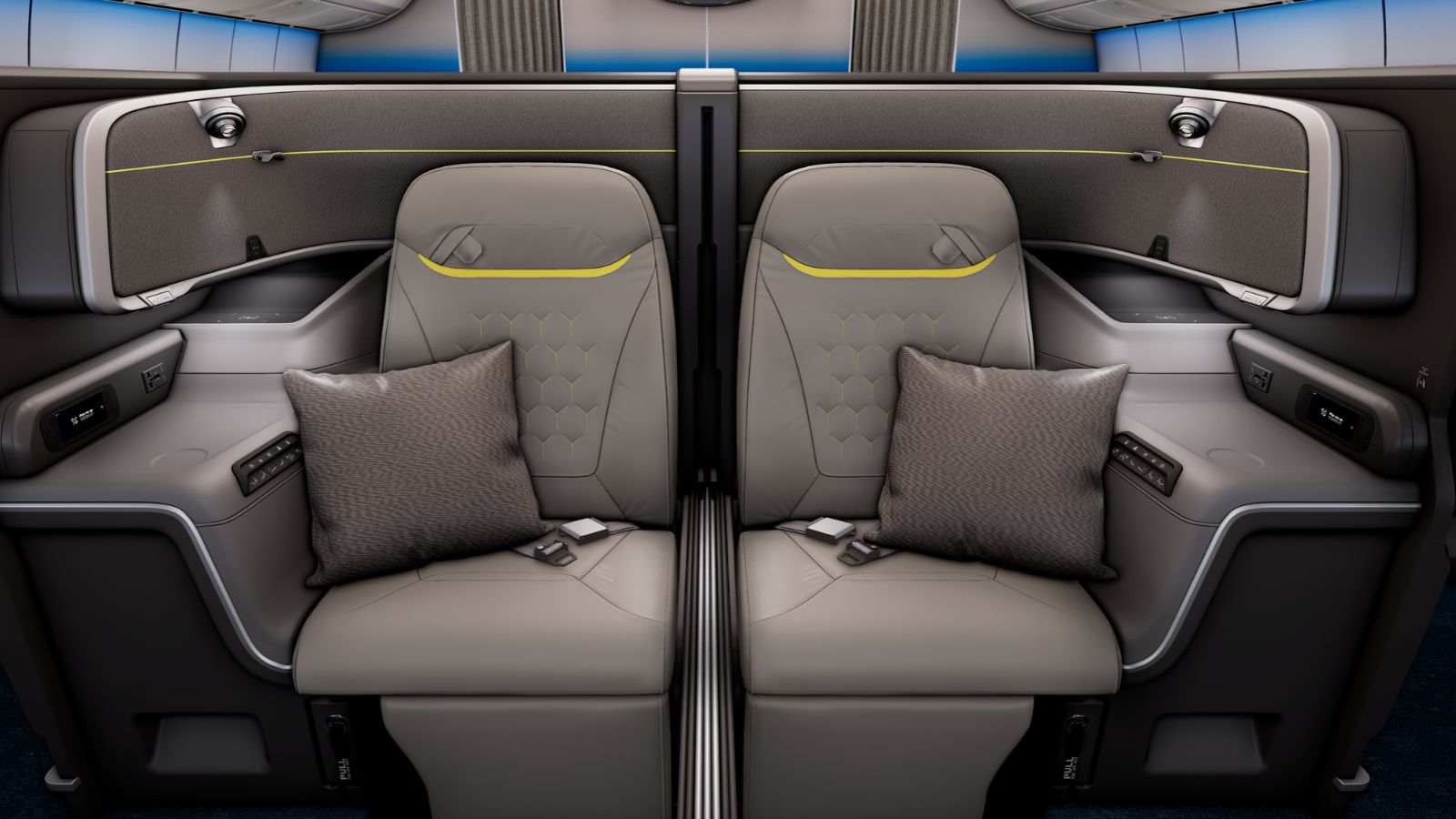
On the evidence of the reaction, the multi-agency model optimised each cabin individually and left the cross-cabin identity layer unowned — a governance gap, not a talent gap. The company's earlier defence now reads differently too. In a video shared by Australian travel creator The Points Wanderer, vice president of product experience Ong Wah Li said research pointed to a contemporary look: "We spoke to our customers, and they said they wanted a more modern refreshed look. We worked with Designworks and Julia de Bono to come up with the colour palette that is modern and refreshed, yet elegant and refined that's suited to business travel," she said. Chief commercial officer Lee Lik Hsin went further, framing brand as journey rather than colour: "The cohesive customer experience for Singapore Airlines goes far beyond colour. It even goes far beyond a cabin. It is the end-to-end experience that we provide," he said. Both statements are defensible; neither explains why the reveal, not the research, was the first place many loyal customers met the palette.
Case in point: the sequencing forced by Boeing. The 777-9 was originally due in 2021; Boeing's third-quarter disclosure on October 29, 2025 pushed first deliveries to at earliest 2027, and SIA's chief operating officer has said the type will not join the fleet in the financial year ending March 2027. That slip moved the first public contact with the new cabins onto retrofitted A350s — and moved the design referendum from a controlled aircraft launch to a social-media reveal. The carrier's chief commercial officer has said first products will now enter service in the second half of 2027, starting with Business Class on long-haul A350-900s, having originally targeted the first half.
What can actually change before rollout?
Conclusion: expect finish-level refinement, not structural redesign. Singapore Airlines has confirmed it will study the feedback, and trade reporting on November 12 indicated the carrier is assessing whether changes to the Business Class seat finishes are feasible. In practice the realistic envelope is materials, trim and colourways: seat structures are certified against suppliers' production lines, and with Collins Aerospace and RECARO Aircraft Seating already locked in as manufacturing partners, a structural redo inside the retrofit window would carry schedule risk the company does not need. Goh's own framing supports that reading: "We appreciate those feedback and we thank our customers for the feedback. We will be reviewing the feedback and look into exploring any further refinements that would help enhance the customer's experience," he said.
The CompanyWatch checklist: five signals to track
- Finish-change confirmation. An official decision on Business Class finishes — colourway or materials — before seat production locks. Absent one, treat the palette as shipping as revealed.
- Rollout start date. First service entry in the second half of 2027 on long-haul A350-900 Business Class; watch whether the window slips again, as it already has from the first half.
- Boeing milestones. Quarterly updates on 777-9 delivery timing; every slip shifts more of the programme onto the controllable A350 retrofit path.
- Sentiment reset. Whether the negative share in CARMA-style tracking falls materially below the 49.4% baseline once actual flights begin.
- Revenue validation. Premium yields and load factors on retrofitted routes, plus KrisFlyer redemption demand for the new cabins — the only evidence that settles whether the backlash touched willingness to pay.
Common misconceptions worth correcting
- "The backlash forces a seat redesign." No redesign has been confirmed; the public commitment covers reviewing feedback and exploring refinements, and the industrial reality points to finish-level scope at most.
- "Negative sentiment means demand damage." Sentiment measures conversation, not bookings; with premium cabins worth roughly 15–20% of full-service passenger revenue, the test is yield and redemption behaviour, not mention counts.
- "Three agencies fragmented the brand." The structure reflects Goh's per-cabin logic; the observed failure is that nobody owned the identity layer across cabins — an integration problem, not an agency-count problem.
What should different readers do with this?
- Investors: treat this as a 2027–28 earnings story, not a 2026 one; the financial read arrives with premium yields on retrofitted routes after the second-half 2027 entry.
- Analysts: benchmark the finish-change decision against competitor retrofit cycles; a quiet palette revision before production lock is the cheapest fix available to SIA.
- Brand and CX teams in any industry: the transferable lesson is process design — test identity alongside function, and assign one owner for the cross-product identity layer before reveal day.
- Suppliers and vendors: lounge, catering and connectivity partners should watch the S$130 million-plus SilverKris programme; the end-to-end thesis means the spend continues beyond the seat.
Frequently asked questions
Will Singapore Airlines change the Business Class colours?
The company has said it will review feedback and explore refinements, and trade reporting on November 12 indicates feasibility work on seat finishes is under way. No palette change has been confirmed.
When do the new cabins enter service?
From the second half of 2027, starting with Business Class on long-haul A350-900s, before extending to the Boeing 777-9 as deliveries allow.
How much is SIA investing?
More than SG$2 billion across the four cabins, building on the S$1.1 billion A350-900 retrofit announced in May 2025, alongside more than S$130 million in lounge upgrades.
Why did SIA use three design agencies?
Because cabin-class requirements differ, in Goh's explanation: each class got the agency best suited to that product — PriestmanGoode, Designworks and Factorydesign respectively.
The real hierarchy here is not cabins; it is who turns premium hardware into an experience customers will not switch away from. For decision-makers, the line to hold through 2027 is simple: judge Singapore Airlines on what gets locked into production, not on what it promises to review.
References
- Singapore Airlines, "Singapore Airlines To Elevate Premium Travel Experience With S$1.1 Billion Airbus A350 Cabin Retrofit Programme," May 6, 2025 — singaporeair.com
- McKinsey & Company, "Airline premium cabins: Profitability at the front of the plane" — mckinsey.com
- InsideFlyer, "Singapore Airlines weighs business-class seat finish changes," November 12, 2026 — insideflyer.com
- Sina Finance, media briefing coverage on the cabin programme and Boeing 777-9 timing, November 6, 2026 — finance.sina.cn
- CAAC News, report on the new long-haul cabin products and the 5,000-respondent research base, November 6, 2026 — caacnews.com.cn
- Rollout details, SilverKris lounge investment, Starlink Wi-Fi and catering plans — cj.sina.cn
- MARKETING-INTERACTIVE / CNA video remarks by CEO Goh Choon Phong, November 2026