
GlobalBizSight CompanyWatch: Who Funds Disney and Visa's Asia Pacific Perks? Three Co-Brand Playbooks Compared
Short answer: the alliance announced on 17 November makes Visa the exclusive payment network partner for Disney co-branded card programmes across participating Asia Pacific markets, with Visa also presenting sponsor of D23 Asia. The counterintuitive part is who funds the perks: neither signing brand carries most of that cost — the issuing banks do. That detail, more than the fanfare, is where this deal's business logic sits.
What was actually agreed, and how far does "exclusive" reach?
Conclusion first: the exclusivity covers a card-programme category, not every payment touching Disney in the region. The agreement has three moving parts:
- Co-branded cards. Visa becomes The Walt Disney Company's exclusive payment network partner for Visa co-branded card programmes in participating markets — not an exclusivity over payments at parks, stores or streaming.
- Fan event. Visa is presenting sponsor of D23 Asia: The Ultimate Disney Fan Event in Singapore from 25 to 27 June 2027, with eligible cardholders gaining presale access to D23 Asia. A presenting sponsor is an event's top-billed partner; the position is bought for engagement, not ticket revenue.
- Film and parks perks. Cardholders get opportunities to see Marvel Studios' Avengers: Doomsday ahead of its theatrical release in select markets, plus planned privileges at Hong Kong Disneyland Resort: early park entry, priority access to selected entertainment offerings and dedicated character meet-and-greet experiences. Further experiences may follow over time at Hong Kong Disneyland Resort and Shanghai Disney Resort.
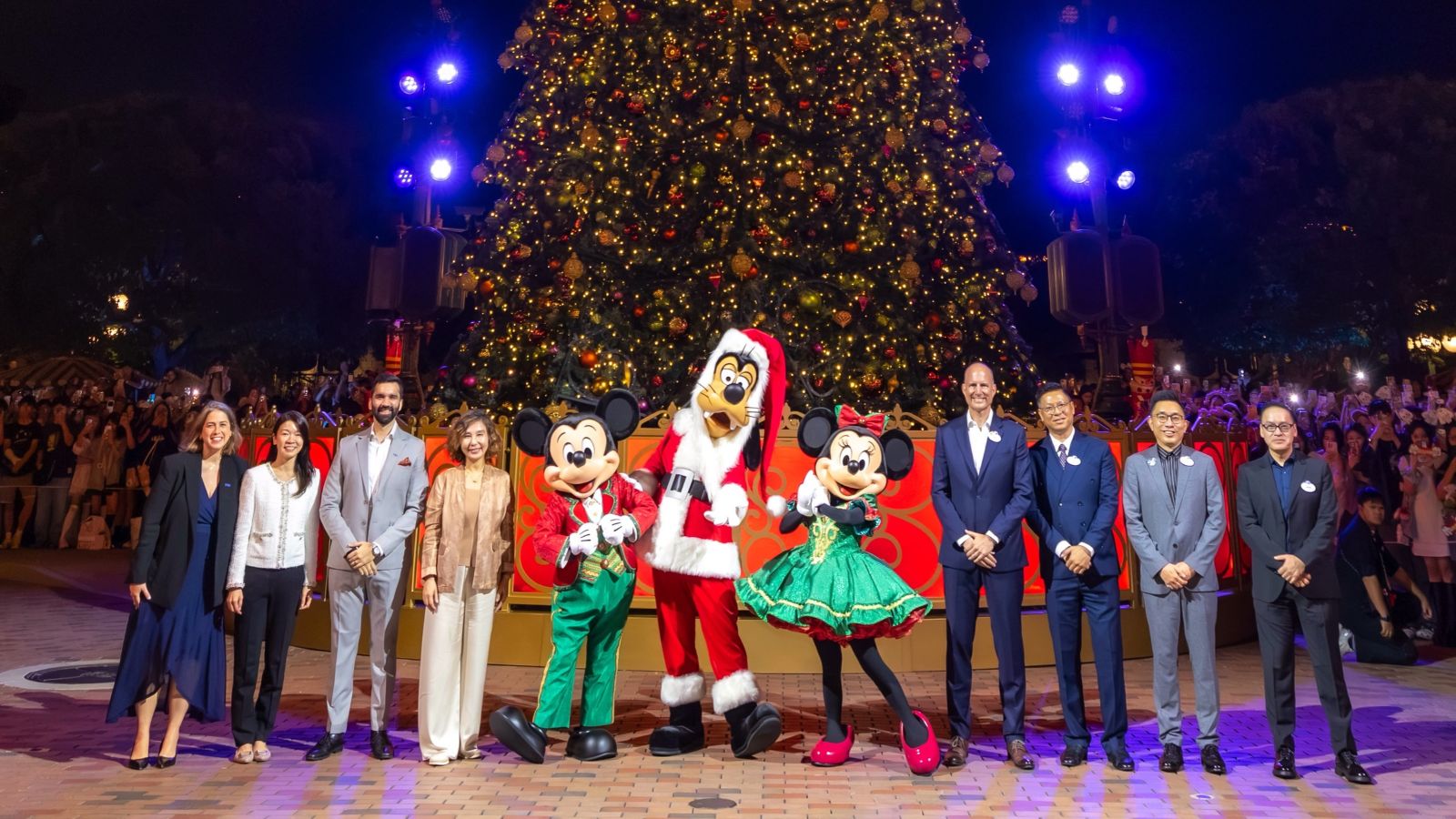
"This multi-year collaboration builds on our relationship with Visa and creates new ways for fans across Asia Pacific to connect with Disney. From Disney-branded Visa cards to special access and experiences, we look forward to bringing Disney's unparalleled stories, experiences and products to consumers through a single, integrated alliance across the region," added Ivan Lee, vice president for corporate alliances at The Walt Disney Company Asia Pacific.
The regional deal extends a relationship the two companies already operate in the US and Europe, the Middle East and Africa (EMEA). What is new is running it as one integrated regional structure rather than market-by-market arrangements.
Who actually pays for the perks?
Conclusion first: in a co-brand structure, the issuing bank funds the benefits and keeps the economics. Visa's own regional head said as much: "Asia Pacific is home to some of the world's most passionate Disney fans, and this partnership is about creating more ways for them to access the experiences they love. By bringing together Disney's iconic brands and experiences with Visa's trusted network, we can deliver compelling benefits for cardholders while creating new opportunities for our issuing partners across the region. We're excited about what we can build together and the experiences we can unlock for consumers," said Vidur Khanna, VP, head of regional sellers and co-brand, Asia Pacific, Visa.
The mechanism, in plain terms: every card payment carries interchange, the small fee a merchant's bank pays the cardholder's bank per transaction. An issuer that signs a Disney co-brand keeps a share of that toll, adds interest when balances revolve, and buys customers with perks it hopes cost less than those customers are worth. Disney contributes IP at low cash cost; Visa gains volume and card preference; the issuer carries the balance-sheet risk. The US precedent is proven — Disney Visa credit cards there are issued by JPMorgan Chase Bank, N.A., and in February 2026 Chase and Disney launched the Disney Inspire Visa Card at a US$149 annual fee.
Asia Pacific changes the arithmetic. Annual fees on mass-market cards are low or zero in several key regional markets, so issuers must justify the perk bundle through acquisition volume and spend share — workable where acquiring a cardholder is already expensive, a poor trade where it is not.
Why Asia Pacific is a different game — where Tencent and Disney+ fit
Conclusion first: mainland China caps the model's ceiling, because co-branded network cards are not the dominant payment habit there. Mainland payments run mainly through Tencent's Weixin Pay and Alipay wallets, which is consistent with the announcement framing experiences at Shanghai Disney Resort only as possibilities over time rather than launch commitments.
Across much of the rest of the region the engagement stack already exists: Disney+ counted roughly 132 million subscribers as of end-September 2025, and Disney keeps pulling film, parks, streaming and retail into single cross-channel pushes, the same integration logic as its recent Make the holidays magic campaign. The co-branded card is designed as the transactional layer on top of that stack.
Is the perk inventory credible? Hong Kong Disneyland Resort's record year says yes
Conclusion first: access privileges are only worth selling if the property has traffic worth beating, and Hong Kong Disneyland Resort enters this alliance off its best year. Its fiscal 2024 results showed record attendance of 7.7 million, net profit of HK$838 million and revenue up 54% to HK$8.8 billion, driven largely by the Mainland China visitor rebound, per the resort's Annual Business Review.
One caveat: early park entry is an access privilege, not free admission, and its value scales with crowds — substantial on peak days, marginal on quiet ones. That scarcity is what a co-brand wants; it also means perceived card value will swing with attendance cycles, worth tracking alongside issuance.
The timeline is the tell
Conclusion first: the nearest catalyst is the film, not the fan event. Marvel Studios' Avengers: Doomsday is scheduled to open in the US on December 18, 2026 (December 16 in the UK), so preview opportunities in select markets sit months ahead of D23 Asia's 25 to 27 June 2027 Singapore dates — and ahead of any announced card terms, with eligibility, participating markets and launch timelines expected in the coming months. The measurement plan follows the sequence: preview take-up is the first observable test, the June 2027 sponsorship the second, card launches the third. Engagement at step one with no named issuers by step three would make this a sponsorship, not a strategy.
Three co-brand playbooks, compared
| Playbook | Reference case | Who funds what | Cardholder value | Where it breaks |
|---|---|---|---|---|
| Fee-bearing card | Chase-issued Disney Visa in the US; Inspire card at US$149 annual fee | Issuer monetises annual fees, interchange share and revolve interest | Rewards dollars, statement credits | Needs consumers willing to pay for a brand card |
| Experience-led co-brand | This Asia Pacific alliance | Issuer funds perks as acquisition cost; network and brand contribute reach and IP | Early park entry, presale access, film previews | Low-fee markets cap issuer economics; perk value swings with crowds |
| Event sponsorship | Visa presenting sponsor of D23 Asia | Visa's marketing budget | Presale access to D23 Asia | Episodic audience; impact concentrated in one week |
The trade-offs as decision rules: an Asia Pacific issuer should join where a perk bundle costs less than what it already pays to acquire each new cardholder, and where its customer base sits inside Disney's park catchments — Hong Kong, Shanghai and travel flows into Singapore. For Disney, one regional structure standardises what was fragmented, at the cost of coordinating regulators, issuers and park operators. For Visa, the deal defends network preference where domestic schemes and wallets are strong.
Common misconceptions
- "Exclusive partner" means Visa replaces all payments at Disney in the region. No — exclusivity covers Visa co-branded card programmes in participating markets only.
- Disney and Visa fund the perks themselves. In standard co-brand structures the issuing bank funds cardholder benefits against interchange share and spend.
- This is fan culture with no financial read-through. The read-through is issuance, spend share and interchange; fandom is the sales channel, not the KPI.
What to watch next: an action list
- Named issuing partners in participating markets, due among details expected in the coming months.
- Card terms: annual fee levels, rewards structure and eligibility rules, once published.
- Take-up of the Avengers: Doomsday previews, the earliest engagement proxy ahead of the December 18, 2026 US opening.
- D23 Asia presale mechanics and sell-through for the 25 to 27 June 2027 Singapore event.
- Whether early entry and meet-and-greet privileges go live at Hong Kong Disneyland Resort, and whether Shanghai Disney Resort moves beyond "over time" language.
Frequently asked questions
Is Visa now the only payment network Disney uses in Asia Pacific?
No. Exclusivity applies to Visa co-branded card programmes in participating markets; parks, stores and streaming still accept many payment methods.
When do the perks start?
Film previews are nearest-term, ahead of Avengers: Doomsday's theatrical release; D23 Asia runs 25 to 27 June 2027 in Singapore; card programmes await announced timelines, expected in the coming months.
Who issues the cards and who bears the perk cost?
Issuing banks. In the US, Disney Visa cards are issued by JPMorgan Chase Bank, N.A.; Asia Pacific issuing partners are not yet named and will fund benefits against interchange share and spend.
Why should investors care about a fan event sponsorship?
Because the sponsorship is the visible layer of an issuance play: the KPI is new cards and spend share, and the event is the acquisition funnel.
One reminder for investors: an exclusivity clause is only a moat once someone builds on it. If no major Asia Pacific issuer has put a Disney-branded Visa card into market by the time D23 Asia opens next June, treat this alliance as a sponsorship with extra steps — and price it accordingly.
References
- The Walt Disney Company — Chase and Disney launch the Disney Inspire Visa Card (February 2026): thewaltdisneycompany.com
- Chase — Disney Visa credit cards, issued by JPMorgan Chase Bank, N.A.: creditcards.chase.com
- Hong Kong Disneyland Resort — Annual Business Review for the Fiscal Year 2024: hkcorporate.hongkongdisneyland.com
- Marvel.com — Everything to Know About Avengers: Doomsday: marvel.com
- The Hollywood Reporter — Disney fiscal Q4 2025 results, Disney+ subscribers: hollywoodreporter.com