
CompanyWatch Comparison: Three Ways to Read the Jensen Huang Probe — Which One Fits Your Nvidia Position
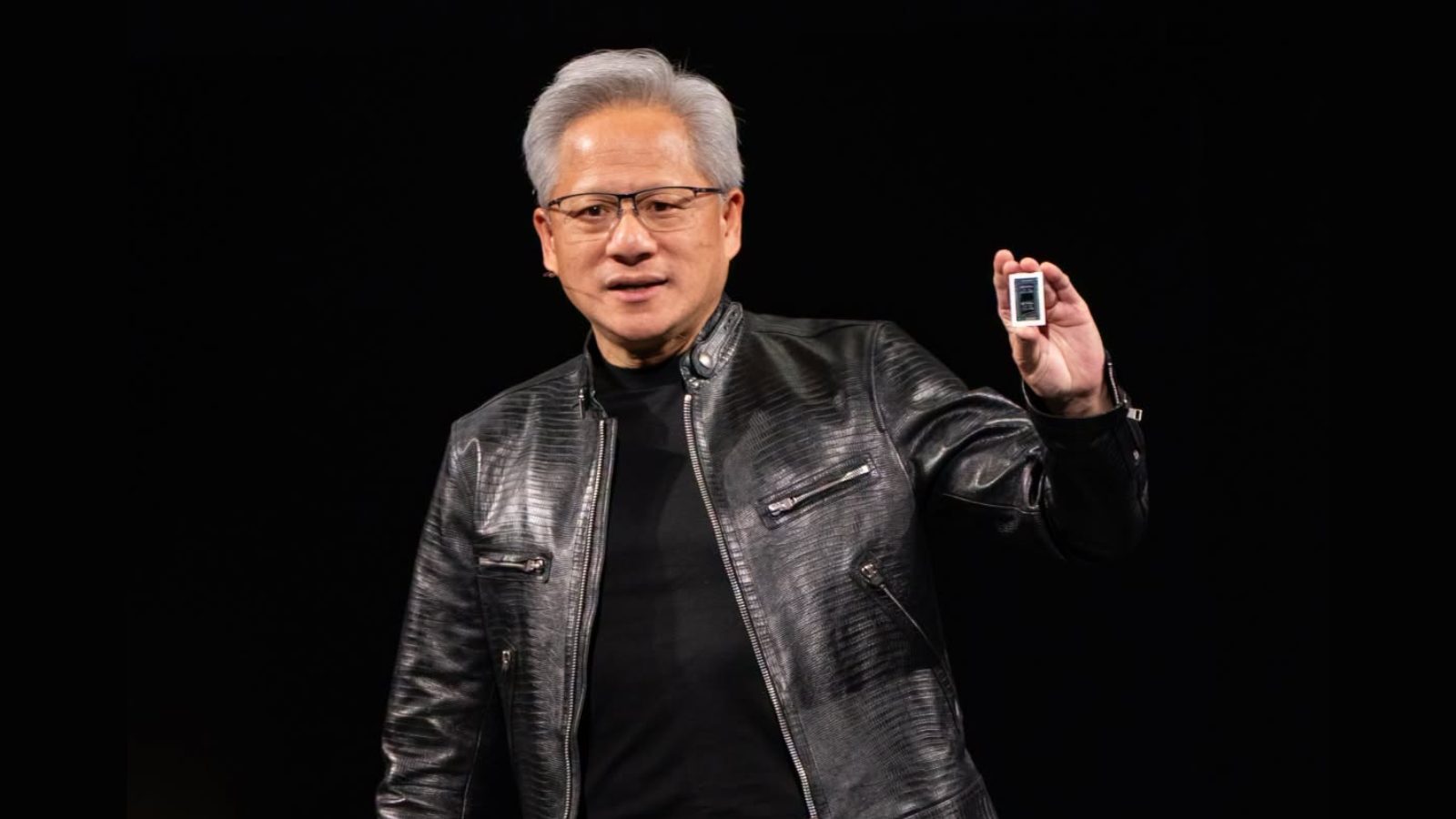
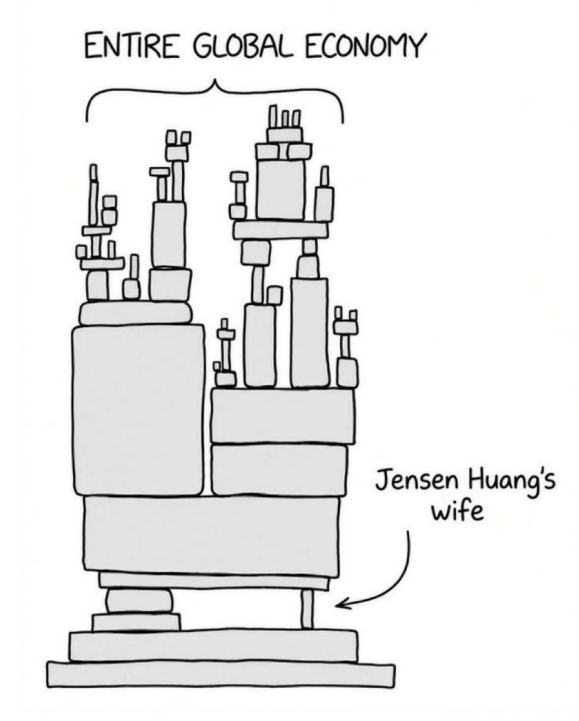
A company whose orders, guidance and customer list did not change still lost value. The repricing skipped the income statement and landed on the judgment of one founder. Our read: the board inquiry into Jensen Huang and Alice Huang supports three defensible interpretations — attention noise, a judgment discount, and a governance exposure tied to succession — and which one should move you depends on whether you buy the chips, work for the company or own the shares.
What is on the record, and what is only alleged
Before comparing interpretations, separate verified items from open questions, because the two get conflated in the market reaction.
- The board opened an independent inquiry into allegations involving the chief executive and Alice Huang, the former managing director of Singaporean firm Megaspeed, which has existing business ties to Nvidia. The review follows media claims that Alice Huang was a Chinese spy.
- Nvidia's own formulation, published by the company and repeated in press coverage, is: "The board's inquiry will examine all available information. Jensen Huang fully supports the review and has committed to cooperating with it. The board has confidence in Jensen Huang and his leadership team and will provide further updates as appropriate."
- The company also stated it had no reason to think its secrets or national security had been compromised. The board's framing is an independent investigation into whether the founder was the target of a hostile intelligence operation, not a review of his day-to-day decision authority.
- In a memo circulated to staff, Huang acknowledged an extramarital affair and apologised to his family and colleagues. "I was unfaithful to my wife. My actions hurt her and our children. There is no excuse for what I did. I am deeply sorry," he wrote.
- On price: Nvidia's shares fell more than 7% as of today, removing roughly US$250 billion from the market value of the world's second-most valuable company. At around US$4.31 trillion, the technology group remains well ahead of major rivals such as Microsoft.
- On the commercial thread: US officials have suspected Megaspeed of smuggling Nvidia's most advanced chips into China for some time, and the New York Times started looking into the distributor last year. NYT reported this week that a Commerce Department inquiry into the Singapore company was halted; Bloomberg separately reported that Nvidia's general counsel intervened in the US probe. None of that has been adjudicated.
- On balance: Megaspeed has publicly denied that its transfers broke the law and has pointed to earlier investigations that found no violations, while China rejected the allegations reported by the New York Times. Huang's children also work on his staff, a fact that keeps conflict-of-interest questions live regardless of the spy finding.
Why does the stock move when nothing in the business changed?
Because at this valuation, a large share of the price is a bet on decision quality, not on cash flow already booked. Three readings compete.
| Reading | What it prices | Best supporting evidence | Signal that falsifies it |
|---|---|---|---|
| Attention noise | Headline risk premium, nothing structural | Charles Lankester, EVP of Reputation at Ruder Finn Asia, treats the 7% off as froth and asks: "What has fundamentally changed in the business? What long-term damage will result from this?" | A full recovery in weeks with no change in oversight, disclosure or role |
| Judgment discount | Whether the founder still sees what others miss, especially around a related customer | Emma Smith, CEO of Sandpiper Communications, argues recovery will be hard precisely because the board is examining a possible spy operation | Findings confined to personal conduct, with distributor ties documented and disclosed |
| Governance and key-person exposure | Concentration of decisions in one person plus the absence of a named successor | The Wall Street Journal reported on 10 November that Huang does not believe in succession planning and that this has become a material risk for Nvidia | A credible succession disclosure and a standing independent committee with defined scope |
Which reading has the stronger evidence base?
The noise reading is the weakest, not because the reputational science is wrong but because of what is being investigated. Smith puts it bluntly: "The fact that the New York Times started looking into Megaspeed last year and US officials have suspected Megaspeed of smuggling Nvidia’s most advanced chips into China for some time, begs the question why he didn’t suspect the same? Thus putting a very large question mark over his judgment."
Lankester's counterweight is that this category of scandal has a short half-life: "With very few exceptions, the majority of crises are like emergency flares fired into the sky: very hot, very bright but ultimately they very quickly burn out. I suspect this will be the case for Jensen Huang. He will not be the first CEO, or indeed, anyone, to get caught out in a relationship outside of their marriage."
He also argues the affair was not concealed: Huang has been photographed frequently with the alleged love interest, who is also named (Ms) Huang, so "I would imagine in his circle, this relationship has been known for years. My forecast? The company will close ranks, the story will move on very fast and the share price will be back to where it was in days."
Both views are testable. That is the practical difference between opinion and an observation plan.
Why the leather jacket was part of the valuation
For years Huang maintained an unusually approachable public profile for a billionaire technology executive: the trademark jacket, late-night street food appearances, readiness to mingle with fans. That persona is now being displaced by temporary internet memes, and the exposure is asymmetric because the brand equity was personal rather than institutional.

"The street food and familiar jacket make him approachable, but his reputation also rests on seeing what others miss and making good decisions under pressure. The leather jacket makes him recognisable. His judgment makes him credible," said Oliver Ellerton of Ellerton & Co. Public Relations.
What raises the stakes is where Nvidia sits. Its technology is at the centre of the global AI race and of politically sensitive arguments over access to advanced computing. That does not make other technology companies irrelevant to national security, but it creates a specific exposure here, as Ellerton put it: "The more strategically important the company, the less its board can rely on personal reassurance from the founder,"
Read alongside the regulatory frame, the commercial channel matters more than the personal one. In January 2026 the Bureau of Industry and Security shifted to case-by-case licence review for advanced chips destined for China and Macau, and the Congressional Research Service has described US rules as aimed at limiting People's Republic of China access through third countries and intermediaries. A distributor in Singapore sitting inside that routing logic is a compliance question; a marriage is not.
Three recovery playbooks, compared
The company is currently running the containment playbook: the CEO stays in place, the inquiry is scoped as a security matter, and independent directors plus outside counsel own it. The alternative playbooks are disclosure-first (publish findings as far as law allows) and delivery-first (let numbers carry the apology).
Ellerton sets the conditions under which containment survives contact with scrutiny: "Independent directors and investigators need the access they require, findings should be communicated as far as legally and responsibly possible, and any weaknesses identified must be addressed. He must also accept consequences if the findings warrant them."
Cynthia Chan, the Hong Kong and North Asia lead at Bud Communications, backs delivery-first: "In business, results are the most credible form of contrition. Investors and employees will forgive a lot from a leader who keeps winning, and they will forgive very little from one who only talks about change."
Shawn Balakrishnan, APAC partner at Penta Group, marks the boundary where containment stops working: if findings are substantiated and involve intelligence activity or export-control circumvention, the issue moves beyond personal reputation into governance and corporate accountability. Everyone should refrain from prejudging the investigation, he adds, but the company's strategic importance cannot substitute for scrutiny. "The broader lesson is that a company needs credibility beyond its founder. A strong leadership team, independent oversight and clear standards help ensure that confidence in the business can withstand questions about the person at the top."
For how the same pattern played out for other founder-led technology groups, see our earlier case file on the board probe and founder risk, and the tracking playbook for control and succession risk.
Common misconceptions worth discarding
- A falling share price is proof of wrongdoing. It is proof of repriced uncertainty, which is a different claim.
- "No compromise found" closes the case. It closes one question — leak risk — and says nothing about disclosure, related-party ties or board process.
- An apology resets trust. Using a product or holding a stock does not equate to restoring trust in its leader; distinct audiences reach distinct judgments, with developers valuing the technology, employees watching whether the founder faces the standards expected of everyone else, and retail investors weighing confidence in the business against concerns about leadership.
- The founder is irreplaceable, so the company is safe. Ellerton is direct on the logic: "Particularly at a strategically important business, stakeholders need confidence in the institution as well as the individual. If a company can only reassure people by saying its founder is irreplaceable, it has just described its biggest vulnerability."
- Memes mean permanent brand damage. Charismatic founders are real assets — "They attract talent, explain complicated businesses and give people confidence in the future. The risk comes when admiration makes it harder for colleagues or boards to challenge them. Being exceptional at building a company does not make someone exceptional at every decision."
Decision matrix: which reader should act on which signal
| Reader | What the event tests | Action | Horizon |
|---|---|---|---|
| Chip buyer or cloud customer | Supply continuity and export licence certainty, not leadership gossip | Confirm allocation terms and check whether any distributor relationship is under review | Next two quarters |
| Employee or candidate | Whether the founder is held to standards applied to everyone else | Watch the scope granted to independent directors and outside counsel | Until findings land |
| Retail holder | Confidence in the business versus concerns about leadership | Size the position to a single-person dependency until governance answers exist | Multi-quarter |
| Institutional or credit analyst | Institutional strength: committee mandates, disclosure cadence, succession language | Treat the next proxy and the next quarterly report as the disclosure events, not the headline | 6–18 months |
What to watch next
- Scope drift: does the inquiry stay on "was the CEO targeted by a foreign intelligence effort", or extend to related-party disclosure and export-control compliance around Megaspeed?
- Publishing discipline: does the board communicate findings as far as legally and responsibly possible, or close with a one-line sentence of confidence?
- Succession disclosure: any named successor, standing committee mandate or interim authority language in filings, after years of the founder saying he does not plan one.
- Price test of Lankester's thesis: a return to pre-headline levels "in days" versus a persistent discount, which is the cheapest available read on how much of the valuation was personal.
- Operating proof: the next scheduled quarterly report and roadmap update, since, as Chan notes, results carry the credibility that statements cannot.
Frequently asked questions
Is the Nvidia board moving to replace Jensen Huang?
No. Nothing on the record indicates removal. The board says it has confidence in him and his leadership team, and his replacement is not settled; what the inquiry does change is how his decision-making is perceived.
Has Nvidia been found to have leaked technology?
No finding has been published. The company stated it had no reason to think its secrets or national security had been compromised, and the review is still open.
Why does a personal relationship become a corporate governance issue?
Because the other party leads a firm with existing business ties to Nvidia, and that firm sits inside an enforcement conversation about routing advanced chips to China. The overlap between a counterparty relationship and an unexamined personal relationship is a board question, not a tabloid one.
Does a 7% one-day move mean investors no longer believe in AI demand?
Not on the evidence available. Orders, guidance and the competitive position in AI computing are unchanged by the disclosure, which is exactly why analysts split between a noise reading and a governance discount.
What is key-person risk in plain terms?
It is the amount of enterprise value that depends on one individual's judgment, relationships and continued attention, and how little of that is written down into process. Where no successor is named, the risk is priced rather than documented.
A reminder for holders: a price recovery can be genuine and still mean nothing about governance. If your thesis rests on one person's judgment, treat the board's findings as a risk event you do not control, and position for it before the report, not after.
Sources and further reading
- NVIDIA Board statement on the independent investigation — https://nvidianews.nvidia.com/news/statement-from-nvidia-board-of-directors
- BBC, market reaction and valuation reporting — https://www.bbc.com/news/articles/c3dxw10rjn9no
- The New York Times on the halted Commerce Department inquiry into Megaspeed — https://www.nytimes.com/2026-11-09/business/economy/nvidia-megaspeed-investigation-huang.html
- The Wall Street Journal on succession planning and Nvidia's risk — https://www.wsj.com/tech/jensen-huang-doesnt-believe-in-succession-planning-its-become-a-big-risk-for-nvidia-abd9ea9d
- Bureau of Industry and Security, revised licence review policy for semiconductors exported to China — https://www.bis.gov/press-release/department-commerce-revises-license-review-policy-semiconductors-exported-china
- Congressional Research Service, US Export Controls and China: Advanced Semiconductors — https://www.congress.gov/crs-product/R48642
- Megaspeed's denial of wrongdoing, as reported in market press — https://www.livemint.com/companies/news/nvidia-chip-controversy-megaspeed-denies-report-on-illegal-transfers-to-china-says-investigations-found-no-violations-11794218691521.html