
CompanyWatch: Musk's 'Baby Company' Pitch and Tesla's Shanghai Solo Play — What Eight Years of Full Ownership Bought
GlobalBizSight CompanyWatch · By Marc Hale
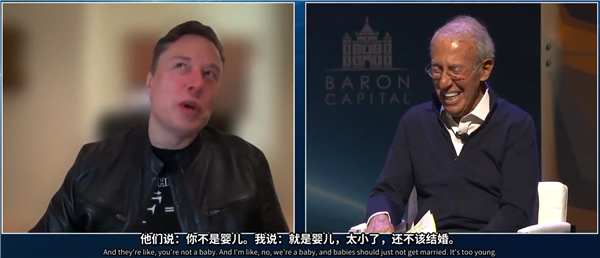
At the 33rd Baron Investment Conference in New York on November 7, Elon Musk said Tesla secured full ownership of its Shanghai Gigafactory by refusing a Chinese partner. His argument on the record: Tesla was a baby company, and babies should not get married. His reason was decision speed, not profit share. Eight years on, that single governance choice anchors a plant with annual capacity of more than 950,000 vehicles and more than half of Tesla's global deliveries.
For investors and competitors, the value of Musk's anecdote is not the punchline. It is what it reveals about how Tesla allocates capital, who signs off on capacity, and how the company now behaves when policy, tariffs and local rivals move against it. This report reconstructs the negotiation, the regulatory window that made it possible, the operating results it produced, and the indicators that will show whether the solo model is still earning its keep.
What exactly did Musk say about the negotiation?
The short answer: a multi-year standoff over ownership, resolved only after China changed the rule rather than Tesla changing its position. Baron Capital founder Ron Baron hosted the conversation; the key elements, as Musk told them, were:
- At the time, foreign carmakers building plants in China were expected to partner with a local firm, with foreign equity typically capped at 50%.
- The negotiation ran for several years, with Chinese officials insisting Tesla find a domestic partner.
- Musk's refusal: "We were just a baby company; babies shouldn't get married, and a baby walking down the red carpet would look ridiculous."
- Pressed by counterarguments, he held the line — the company was an infant, too young to marry — and after a few rounds of back and forth Tesla was approved to own the plant outright.
- Why he fought for it: Tesla needed to act fast and decide fast; if every move required someone else's permission, innovation would be impossible. He compared it to driving with your own hands on the wheel, then undercut his own metaphor by noting that with autonomy nobody needs hands on the wheel anymore.
Why did the ownership fight matter more than the money?
Because a 50% cap is a veto right, not a dividend split. Legacy foreign automakers accepted the joint-venture structure and, in exchange, gave partners standing in boardroom decisions on model mix, local sourcing, pricing and capacity expansion. Tesla's position was that in a hardware business where iteration speed is the moat, borrowed permission is the bottleneck.
The sequencing supports that reading. Tesla did not win an exemption for itself; it moved first into a window China opened deliberately. The National Development and Reform Commission lifted the foreign equity cap for new energy vehicles in 2018, then for commercial vehicles in 2020 and for all passenger cars from January 1, 2022, when the separate rule limiting each foreign maker to two joint ventures was also removed, per China's official portal and reporting by CNBC. Tesla's Shanghai project became the first wholly foreign-owned passenger-vehicle plant precisely because it sat inside the first, narrowest phase of that opening.
Read this way, the anecdote is a template rather than a lucky story: a regulator with an industrial policy goal, a company willing to trade local market access for unilateral control, and a timing bet that only a fast decision-maker can take. The same control logic is visible in Tesla's current capacity choices, as our colleagues map in tracking Tesla's Cybertruck wind-down and Cybercab pivot in Texas — one plant's line repurposed for another product without a partner's consent.
How did the deal timeline actually unfold?
| Milestone | Date | What it signaled |
|---|---|---|
| China announces removal of foreign equity caps for new energy vehicles | April 2018 | Policy door opens; JV structure no longer mandatory for EV plants |
| Tesla signs with Shanghai | July of that year | Three months after the announcement — evidence the terms were pre-negotiated |
| Shanghai Gigafactory breaks ground | January 2019 | First 100% foreign-owned vehicle manufacturing project in China |
| Groundbreaking and first deliveries inside the same year | 2019 | The "Tesla speed" benchmark for China plant construction |
What did full ownership buy operationally?
A supply chain rebuilt at speed. The plant now exceeds 950,000 vehicles in annual capacity, contributes more than half of Tesla's global deliveries, and serves as the company's core export hub for Europe and Asia-Pacific — the three functions a minority partner would normally have contested on margin and volume grounds.
Two independent data points sharpen the picture. First, localization: China's state-affiliated press reported that the Shanghai plant's supply-chain localization rate reached roughly 95% by late 2025, versus about 30% at the end of 2019, with export shipments of more than 35,000 vehicles in a single month — the highest monthly level in two years (Global Times, November 2025). Second, Reuters' factbox on Tesla's China operations, citing Tesla executives, put Shanghai's share of 2025 global deliveries at around 52%, consistent with the "more than half" claim.
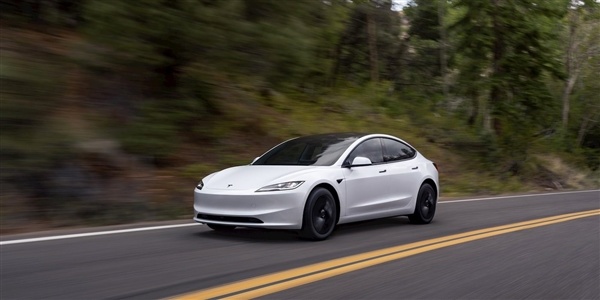
Ownership also changed Tesla's tariff posture. Because it is a foreign-invested maker rather than a Chinese brand, the European Commission granted Tesla an individual rate of 7.8% additional duty on China-built electric vehicles from October 30, 2024 — the lowest of the sampled companies, against 35.3% for SAIC on top of the EU's standard 10% car import duty (European Commission figures, quoted by Xinhua). Shanghai's export economics are therefore regulated separately from those of the domestic rivals surrounding it, a nuance most retellings of Musk's story skip.
How seriously should Musk's competitive claims be taken?
As directional, not as measured metrics. Musk was effusive: "China is great, I love China, and going there is always inspiring." He said that outside China the two strongest physical-hardware companies on the planet are probably SpaceX and Tesla, while Tesla Model Y remains the best-selling electric car in China — an achievement he compared to winning a land war in Asia, given how strong Chinese automakers have become. Ron Baron added that a Ford executive who visited China was privately stunned by the quality of local vehicles.
The observable version of that claim: Tesla is defending share in its most important cost-and-supply base against domestic players that now compete on software content, not only price. For a reader tracking the company, the point is that "China is the hardest market" and "China is the most valuable plant" are the same sentence.
Is the electricity argument a fair proxy for industrial capacity?
Here the exchange is worth slowing down, because it is the part of the interview most often quoted out of context. Ron Baron framed China's power scale as roughly three times that of the United States, with about 300GW of new generating capacity added each year — close to 60% of America's 550GW installed base. Musk thought the number might be somewhat lower, but accepted the order of magnitude: "China currently generates about 3x the electricity of the US, and the trend is to reach at least 4x, while industrial capacity roughly scales with generation."
An IEA cross-check keeps the claim honest without endorsing the ratio: the agency's Electricity 2025 analysis estimated that data centres in China consumed over 100 TWh of electricity in 2024 and could roughly double that by 2027, with electrification of transport, buildings and industry driving China's demand growth. Musk's argument is a capacity-planning thesis — power availability sets the ceiling on how fast heavy industry and compute can be built out — not a verified statistic. Treat it as an analytical frame, and watch the underlying inputs: grid interconnection queues, industrial electricity tariffs, and announced plant-and-datacenter co-location.
Four common misconceptions about this story
- Tesla lobbied its way to a special exemption. The record shows Tesla moved inside a published, phased opening that applied to all new energy vehicle makers from 2018 and to all passenger cars from January 1, 2022.
- Full ownership was mainly about keeping profits. Musk's stated rationale was decision speed; profit split was secondary to unilateral control over capacity and iteration.
- The negotiation was won by a joke. The "baby company" line is memorable, but the outcome followed several years of talks and several rounds of standoff, not a single quip.
- Shanghai is a Chinese-market plant. It is simultaneously a domestic sales base, an export hub for Europe and Asia-Pacific, and the volume backbone of Tesla's global delivery count.
What to watch next: five tracking indicators
- Capacity utilization against the 950,000-plus threshold. Flat absolute output while Chinese rivals grow is a relative loss, even at full utilization.
- Export share of Shanghai's shipments. A rising export ratio signals the plant is absorbing tariff and pricing pressure that domestic demand cannot.
- EU duty treatment follow-through. Any change to Tesla's individual rate, or the outcome of price-undertaking talks, re-ranks Shanghai's export margin versus Berlin Gigafactory.
- Local sourcing depth beyond the headline 95%. Watch battery and compute content specifically — that is where partner-less control matters most in a supply shock.
- Replication of the solo model. Musk's remark that the deal took years of discussion implies the template is expensive; the next test is whether Tesla applies the same control logic to new fabs, an argument we follow in our Terafab Q&A on who builds and runs the Texas chip factory.
FAQ
Why did Tesla refuse a joint venture in China?
Because joint-venture rules gave a partner standing in operational decisions. Musk's stated reason for holding out was speed: if every action needs someone else's permission, innovation stalls.
Was Tesla the first foreign automaker to own a plant outright in China?
It was the first 100% foreign-owned passenger-vehicle manufacturing project, approved after several years of negotiation and a few rounds of standoff — enabled by the 2018 removal of the new energy vehicle equity cap, not by a bespoke exemption.
How important is the Shanghai Gigafactory to Tesla today?
Structurally central: annual capacity above 950,000 vehicles, more than half of global deliveries, and the export base serving Europe and Asia-Pacific.
Is Musk's power-generation comparison reliable?
Use it as a thesis, not a datum. Musk himself flagged the figure as possibly overstated, though he kept the conclusion that industrial capacity roughly tracks generation. The IEA's own China demand analysis is the better starting point for verification.
Sources and further reading
- China's State Council portal on the removal of foreign equity caps in the auto sector: https://english.www.gov.cn/policies/policywatch/202006/29/content_WS5ef93e09c6d05a0f89706519.html
- CNBC on full foreign ownership of passenger-car manufacturing from January 1, 2022: https://www.cnbc.com/2021-12-27/china-to-remove-foreign-investment-limit-passenger-car-manufacturing.html
- Global Times on Shanghai Gigafactory localization and monthly export volume: https://www.globaltimes.cn/page/202511/1348097.shtml
- Xinhua on the European Commission's 7.8% individual duty rate for Tesla-built vehicles: http://www.xinhuanet.com/english/20241030/d673b7ce4c0340678a1c3fb63812af80/c.html
- IEA, Electricity 2025 executive summary (China data-centre consumption): https://www.iea.org/reports/electricity-2025/executive-summary
- Reuters factbox on Tesla's China operations: https://finance.yahoo.com/markets/stocks/articles/factbox-teslas-china-operations-ev-035303367.html