
CompanyWatch: Tesla Optimus at About $30,000 — How the Price, the Rental Model and the Rivals Stack Up
Tesla's Optimus humanoid carries an initial cost of about $30,000 per unit, expected to slide toward $20,000, with first hand-overs projected next year — around the end of 2027 — and possibly as a rental rather than a sale. That is not the cheapest machine in the category; it is the cheapest offer backed by a manufacturer that trains its own robots on its own line before letting anyone else use them.
General-purpose machines have travelled the same road for a century: a prototype priced like an aircraft, a pilot priced like a vehicle, then a fleet priced like an appliance. The winners are rarely the first to demonstrate — they are the ones that can build at volume, keep units running and take responsibility for the hours worked. Musk sketched Tesla's version of that road recently, at the Barron's Investment Summit, and the details he offered are more useful as a purchasing brief than as a headline.
| Item | What Tesla put on the record |
|---|---|
| Initial unit cost | about $30,000, in the same band as an electric car today |
| Cost once volume ramps | expected to fall to around $20,000 |
| First customer hand-over | next year, around the end of 2027 |
| Commercial form | possibly rent rather than sell |
| Where the work is learned | Tesla's own factories, before external delivery |
| Manufacturing slot | early trial production at the Fremont factory; long-term plan of 1 million units a year |
Read that card carefully, because the headline number is a cost, not a price. Tesla has not published a customer-facing sticker, a lease rate or a service tier, and Musk has kept open the option of renting the hardware outright — which means the buyer's real comparison in 2027 will be between service contracts, not between price pages. His summit appearance also doubled as a company story; GlobalBizSight's read of how Tesla defended full ownership of its Shanghai operation covers the same stage and the same negotiating style on display.
How does about $30,000 compare with what rivals actually charge?
Short answer: mid-band. It is roughly two to three times the price of the cheapest Chinese humanoids that ship today, and a fraction of what a Western enterprise pilot typically costs. That positioning — neither the floor nor the premium tier — is the most important competitive fact in the announcement.
| Machine | Public number today | What that number buys |
|---|---|---|
| Unitree G1 | listed from $13,500 | development and demonstration platform; integration, safety case and uptime are yours |
| Unitree H2 | $29,900 base | full-size humanoid at a published entry price |
| 1X NEO (home) | $20,000 purchase or $499 per month | consumer pilot, subscription with a six-month minimum and a $200 deposit |
| Boston Dynamics Atlas | reported near $150,000 | enterprise rollout behind an incumbent integrator and its service network |
| Apptronik Apollo 2 | no published price | commercial pilots at Mercedes-Benz and GXO Logistics sites, sold as a managed fleet |
| Figure 03 | no published price | pilot deployments only |
| Tesla Optimus | about $30,000 initial, moving toward $20,000 | factory-trained unit, delivery from next year, form of contract undecided |
Two corrections to the naive reading. First, list prices are not deployment prices: a 2026 Bank of America analysis circulated by industry trackers put a Western-built pilot unit nearer $90,000 to $100,000 once integration is counted, which is why several American vendors publish nothing at all. Second, the demand curve is being re-drawn upward while the price curve is being re-drawn downward: Goldman Sachs Research sized the 2035 market at $38 billion as recently as 2024, then lifted its shipment outlook to roughly 6.5 million units and about $138 billion by 2035, per a revision reported in September 2026 — with logistics, warehousing and automotive named as the first adopters.
Is the slide from about $30,000 to around $20,000 believable?
Directionally yes; mechanically it rests on components Tesla does not control end to end. The relevant framework here is a cost-down curve — the rate at which unit cost falls each time cumulative volume doubles, which is the argument Musk is borrowing when he says the early cost will resemble an electric car's and then drop quickly.
Where the analogy holds, it holds powerfully. BloombergNEF's December 2025 survey put the volume-weighted average lithium-ion pack at a record low of $108 per kWh, down 8% year on year and 93% below its 2010 level. Against that benchmark, Optimus's 2.3 kWh 4680 pack is a rounding error in the bill of materials — a few hundred dollars of cells — so energy storage is not the constraint on the price path.
The constraint is everywhere else. Actuators, hands and sensors dominate humanoid bills of material, and Optimus carries 38 degrees of freedom in the body and 22 degrees of freedom in each hand, which is precisely why the dexterous hand is the hardest line to squeeze. The honest reading is that a one-third reduction from about $30,000 to around $20,000 is plausible only if Tesla localises actuators and hand assemblies the way it localised cells — that is analysis, not a published plan.
Rent or buy: which model fits which buyer?
For most first-time industrial buyers in 2027, renting is the rational choice — not because it is cheaper, but because it moves the risk of an immature machine back to the vendor. The distinction between rent and sell is the commercial decision inside this story, and it maps to three different buyer profiles.
| Route | Fits you if | The catch you should price in |
|---|---|---|
| Rent / managed lease | you want a two-shift pilot with vendor accountability for uptime, model updates and the safety case | the vendor sets the terms, the machine is not your asset, and per-hour cost stays high until utilisation is proven |
| Buy outright | you run a controlled site, own integration talent and want the unit on your balance sheet for five years or more | you inherit software support, certification re-validation and residual-value risk on a first-generation platform |
| Wait one cycle | your task needs more than 20 kg of payload, faster travel than 1.2 m/s, or reflex work inside 0.3 seconds | you lose the learning curve your competitor gains, and pricing power sits with the vendor |
Anchor the arithmetic to a wage, not to a brochure. The Bureau of Labor Statistics series for average hourly earnings of all manufacturing employees stood at $37.24 in October 2026, before benefits. Musk's stated expectation is that Optimus works at 5 times the output of an ordinary human worker on repetitive industrial tasks, sustained for about 10 hours per charge — so the vendor case is a per-hour cost in single digits against a loaded human hour in the twenties to forties. The nearest public template for how that is sold comes from a consumer machine: 1X lists the NEO at $20,000 outright or $499 a month with a six-month minimum, which puts the rent-versus-buy crossover at roughly 40 months before service, energy and downtime are counted.
What has to clear before a third party can take a unit?
Three gates, in order, and Tesla has described only the first one in public.
- Training before shipping. Musk said Optimus will be used inside Tesla's own factories first, accumulating real operating hours before external delivery — the same logic behind the Fremont factory's early trial production, with a long-term plan of 1 million units a year but a ramp that still needs time before full mass production.
- A peer-reviewed safety case. Buyers should expect conformance to ANSI/A3 R15.08-1-2020 (R2026) for industrial mobile robots, ISO 10218 for manipulator integration, the second edition of ISO 13482 (circulating as ISO/FDIS 13482) for personal-care robots, and ANSI/CAN/UL 3300 where applicable. Nobody has published Optimus conformance yet, and that gap alone favours a rental contract.
- Capital headroom at the plant. The Fremont line is being re-planned while Tesla's truck line winds down, a trade-off our practical guide to Tesla's Cybertruck wind-down, the Cybercab line swap and the capital trade-off behind it tracks in detail.
The competitive read is that Tesla is not alone in front-loading training. Apptronik opened a nearly 90,000-square-foot warehouse, "Robot Park", where Apollo units rehearse loading conveyors and sorting bins before customers see them, and it raised $520 million at a reported $5 billion valuation in February 2026 to fund that approach. Tesla's advantage is structural rather than technical: its own factory is both the training ground and the first customer, so it does not need to borrow a pilot site.
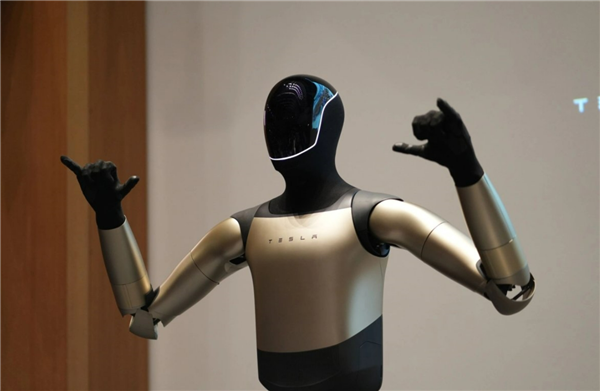
Which specification lines decide the use case?
- 173 cm tall and about 57 kg heavy — built for human workstations, so racking, cell layouts and guarding can stay as they are.
- Walks on two legs at up to 1.2 m/s — slower than a walking operator, which caps travel-heavy tasks.
- Carries up to 20 kg — enough for totes and parts bins, not for pallets.
- Runs Tesla's FSD pure-vision stack with multiple cameras and an in-house AI chip, closing perception, decision and execution in 0.3 seconds — a human-speed reaction budget, not a machine-speed one.
- 38 degrees of freedom overall and 22 in each hand — the reason grasping and assembly are the first credible tasks.
- 2.3 kWh 4680 pack sustains about 10 hours — one long shift per charge, so two-shift coverage needs either a swap strategy or a second unit.
- Head display for interaction — relevant on shared floors where people must read intent.
Four misconceptions that follow every cost headline
- "$30,000 is the price." It is an initial cost figure. With a possible rental model, the number a buyer negotiates may never look like it.
- "The cheapest list price wins." A $13,500 development platform and a factory-trained unit are different products; integration and certification dominate the real invoice.
- "Renting is just financing." Under a lease, the vendor keeps software updates, uptime and part of the liability — which is exactly why the machine is trained in the maker's own plant first.
- "1 million units a year means supply next year." That is the long-term line plan. Full mass production remains a way off, and Musk has said the ramp needs time.
What should buyers and watchers do next?
- Ask for cost per worked hour, not per unit — including duty cycle, spares, and who pays for downtime.
- Ask what the contract covers: model updates, safety re-validation after any change, and injury or damage liability on a shared floor.
- Test one task against the hard limits — 20 kg payload, 1.2 m/s travel, about 10 hours of endurance — before signing for a fleet.
- Require a standards conformance path in writing, even if the answer is "planned".
- Insist the pilot site is yours to measure: hours worked, interventions per shift, tasks completed.
- Reserve budget for re-layout and integration; hardware is the smaller half of the bill.
For investors tracking the company rather than the category, four indicators matter most: whether a lease rate is published at all; the gap between Fremont trial output and the first external hand-over around the end of 2027; evidence that cost is moving from about $30,000 toward around $20,000; and how the robot milestone inside Musk's ten-year compensation plan is reported, now that shareholders approved that plan in November 2025. Reuters recorded the approval and the decade of operating targets it attaches, including robot deployment — which is why this product timeline is also a governance timeline.
FAQ
Will customers buy Optimus or rent it?
Tesla has left both options open. Musk's framing is that the early hand-over may be a rental rather than a sale, which would keep the machine, and its downtime, on Tesla's books.
When does delivery start?
Next year, with the stated window around the end of 2027, after the units have completed operating training in Tesla's own factories and early trial production at the Fremont factory.
Is about $30,000 cheap for a humanoid?
Middle of the pack. Unitree lists the G1 from $13,500 and the H2 at $29,900, while enterprise Western platforms are quoted far higher, and sell-side work puts real Western pilot deployments nearer $90,000 to $100,000.
Does the 5 times productivity claim hold?
It is a target for repetitive industrial work, not a measured result. Against manufacturing wages of $37.24 an hour, the claim only converts into money if utilisation and uptime follow.
The line for decision-makers
What actually separates the tiers in this market is not the difficulty of the robot but who owns the hours it does not work; the buyer who prices downtime into the contract before the demo is over will pay far less than the buyer who prices the machine.
Sources and references
- 1X Technologies — NEO order page (purchase and subscription pricing)
- USA Today — what to know about the NEO humanoid
- BloombergNEF — lithium-ion pack price survey (December 2025)
- BLS series via FRED — average hourly earnings, manufacturing, October 2026
- Reuters — Tesla shareholders approve Musk pay plan with decade milestones
- Goldman Sachs Research — humanoid market sizing and the 2035 revision reported in September 2026
- CNBC — Apptronik raises $520 million; Apollo pilots with Mercedes-Benz and GXO
- Business Insider — Apptronik's Robot Park training warehouse
- ANSI — ANSI/A3 R15.08-1-2020 (R2026) industrial mobile robot safety
- SREs — practical map of humanoid safety standards (ISO 13482, ISO 10218, UL 3300)
- Humanoid price tracker — published list prices across vendors, 2026
- Vendor comparison citing Bank of America's 2026 pilot-unit cost estimate